Whether you’re shopping for your first RV or thinking about trading into something newer, understanding what’s happening in the RV industry can help you make a smarter buying decision. From new 2027 models and used RV values to interest rates and campground availability, here’s what every RV shopper should know this year.
Table of Contents
2027 RV Models Are Arriving
RV Sales Continue to Slow
Why Manufacturers Are Consolidating
Used RV Values Are Rising
Interest Rates Still Matter
Campgrounds Are Becoming Easier to Book
Tax on Loan RVs
Fuel Prices
Changes at LCI Industries
New RV Technology
Love’s Travel Stops
Forest River Customer Service
What is Hot Skin?
Encore RV
Top 50 RV Dealer Award
What This Means for RV Buyers
FAQ
2027 RV Models Are Already Arriving
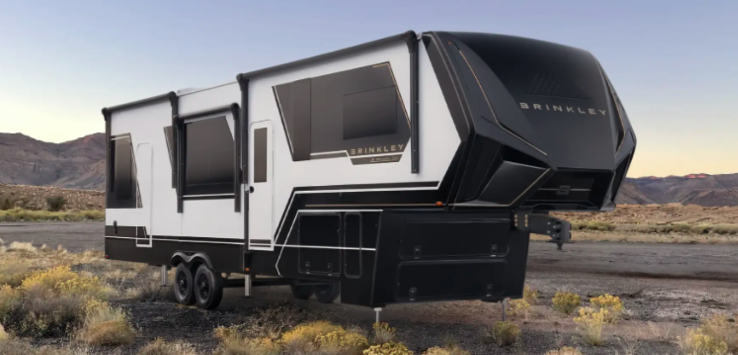
One of the biggest changes in the industry is that many manufacturers have already started shipping their 2027 models.
However, not every manufacturer updates their products on the same schedule.
Some brands have already rolled out their complete 2027 lineup, while others are introducing changes in phases throughout the year.
If you’re shopping for a new RV, make sure to ask:
- What has changed from the previous model year?
- Are additional updates still coming?
- Is this a true 2027 model or a carryover unit?
Knowing the answers can help you avoid surprises after your purchase!
The RV Industry Is Still Adjusting After the Pandemic Boom
The RV industry continues to experience what many insiders refer to as a compression market.
Simply put, demand has slowed after several record-breaking years, causing manufacturers to rethink production. Recent industry data shows:
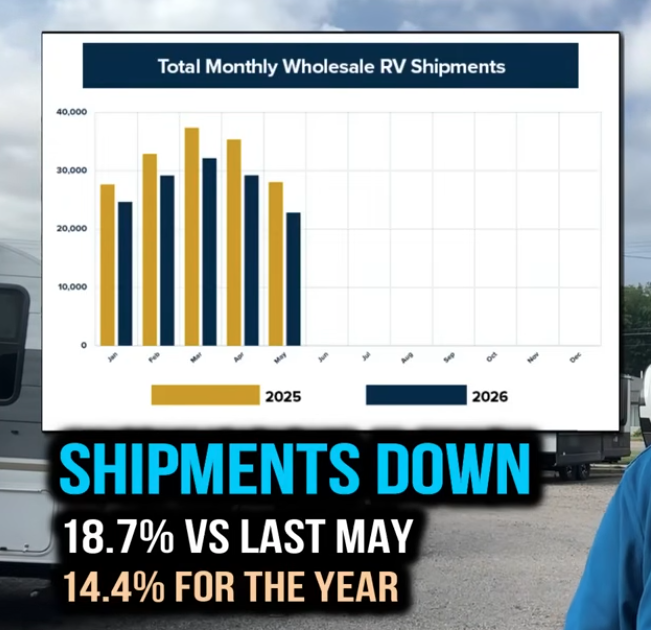
- RV shipments remain down year-over-year.
- Retail sales have softened across nearly every segment.
- Motorhomes, especially Class A models, have seen some of the largest declines.
While slower sales can create challenges for manufacturers, they can also create opportunities for buyers through increased inventory and more competitive pricing.
Why Some RV Manufacturers Are Consolidating
As production slows, manufacturers are finding ways to reduce operating costs.
One trend we’re seeing is the consolidation of manufacturing facilities and product lines.
Rather than operating multiple factories below capacity, companies are combining production into fewer facilities.
For buyers, this doesn’t necessarily mean lower quality, but it does explain why some brands are becoming increasingly similar or are being built in the same facilities.
Used RVs Continue to Be in High Demand
One bright spot in today’s market is late-model used RVs.
Many buyers are discovering they can purchase a lightly used RV with many of the same features as a new model for significantly less money.
Strong demand has also increased used RV values, which could benefit owners considering trading in their current camper.
If you’ve been thinking about upgrading, this may be a good time to have your RV appraised.
Interest Rates Are Still Influencing RV Prices
Interest rates remain one of the biggest factors affecting both buyers and dealerships.
Higher borrowing costs impact:
- Monthly payments
- Dealer inventory financing
- Manufacturer operating costs
- Overall RV pricing
While many expected rates to decline during 2026, those reductions haven’t materialized yet.
If rates eventually fall, financing costs could improve, but buyers shouldn’t assume that’s guaranteed.
Finding Campsites May Finally Be Getting Easier
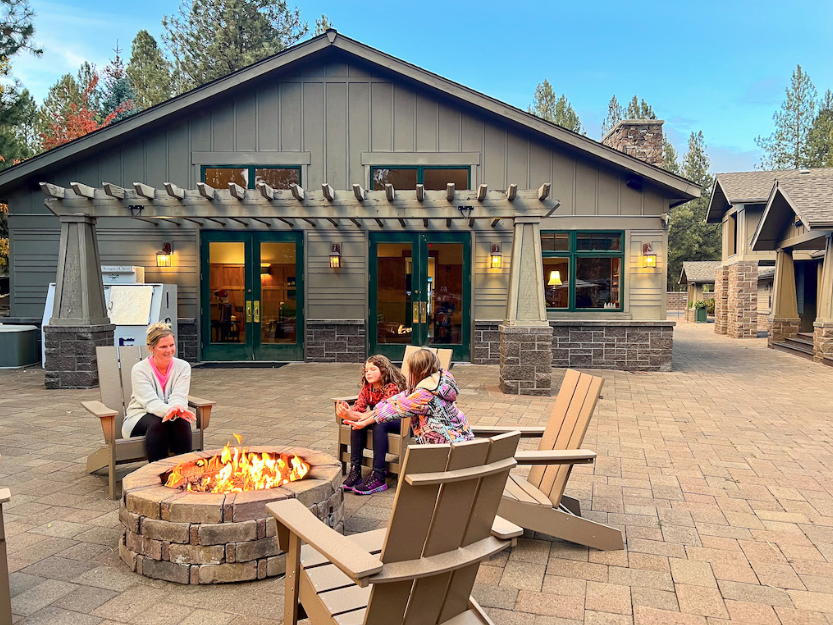
Good news for travelers, campground availability appears to be improving!
Many campgrounds have implemented stricter cancellation policies, reducing the number of “ghost bookings” where campsites sat empty despite being fully reserved online.
For spontaneous travelers, this could make finding campsites much easier than it was during the peak travel years.
Could the No Tax on RV Loans Act Save Buyers Money?
When the One Big Beautiful Bill Act was signed into law in July 2025, it introduced a tax deduction allowing eligible buyers to deduct up to $10,000 per year in interest paid on loans for newly purchased, U.S.-manufactured vehicles. However, while some motorized RVs may qualify under the current language, travel trailers, fifth wheels, and many larger RVs were ultimately left out of the final legislation, despite being included in an earlier version of the bill.
To address that gap, lawmakers have introduced the bipartisan No Tax on RV Loans Act, which would specifically include all RV types under the vehicle loan interest deduction. If passed, the legislation would make qualifying RV loans eligible for the same tax benefit as other American-made vehicles.
What this means for buyers
If you’re planning to purchase an RV this year, don’t delay your decision solely because of this legislation. Instead:
- Follow the progress of the bill.
- Consult a tax professional if it passes.
- Factor any future tax savings in as a bonus, not the primary reason for your purchase.
At the time of writing, the bill has not yet become law. However, if approved, it could provide meaningful savings for future RV buyers while helping strengthen one of America’s largest manufacturing industries.
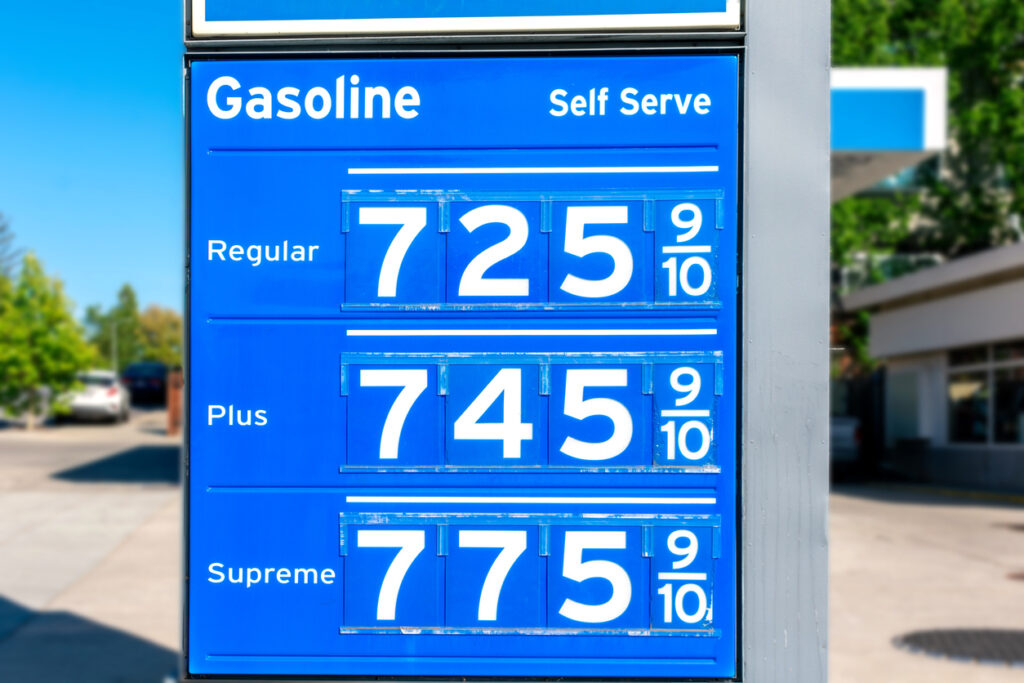
Fuel Prices Continue to Affect the RV Industry
Even if you only travel a few weekends each year, fuel prices affect far more than the cost of filling your truck.
Every RV on a dealership lot was transported by truck. Every appliance, axle, refrigerator, air conditioner, and piece of lumber used to build that RV also traveled by truck before reaching the factory.
Fuel prices influence:
- Manufacturing costs
- Shipping costs
- Parts availability
- Dealer operating expenses
- Delivery costs
Fortunately, fuel prices have declined a bit from recent highs, providing some relief for both manufacturers and consumers. While prices still vary significantly across the country, the market remains in a period of adjustment, many industry leaders are optimistic that improving economic conditions could help drive renewed consumer confidence in the months ahead.
Leadership Changes at LCI Industries Could Shape the Future
Many RV owners have never heard of LCI Industries, but chances are their RV contains dozens of Lippert components.
LCI manufactures products like:
- Entry steps
- Windows
- Axles
- Leveling systems
- Furniture
- Refrigerators
- Air conditioners
- Slide mechanisms
- Doors
- Chassis components
Recently, longtime CEO Jason Lippert stepped down, with industry veteran Johnny Sirpilla assuming leadership.
Leadership changes don’t usually create overnight product improvements, but they often influence long-term priorities such as:
- Product innovation
- Customer support
- Manufacturing efficiency
- Warranty improvements
Considering how many RV manufacturers rely on Lippert products, this is one industry change worth watching.
New RV Technology: Variable-Speed Air Conditioners
One of the biggest technology improvements making its way into RVs is variable-speed air conditioning.
Traditional rooftop air conditioners work much like a household window unit:
- Turn on
- Cool aggressively
- Shut completely off
- Wait until the RV warms back up
- Repeat
This constant cycling creates temperature swings and uses more electricity.
Variable-speed systems operate differently.
Instead of constantly turning on and off, they automatically adjust compressor speed based on how much cooling is actually needed.
Benefits include:
- More consistent temperatures
- Quieter operation
- Lower power consumption
- Better humidity control
- Improved campground comfort
Furrion’s Chill Cube helped popularize this technology, and now additional manufacturers, including Fagatti with its new InstaCool system, are entering the market.
As competition increases, expect this technology to become available on more mid-range and entry-level RVs over the next few years.
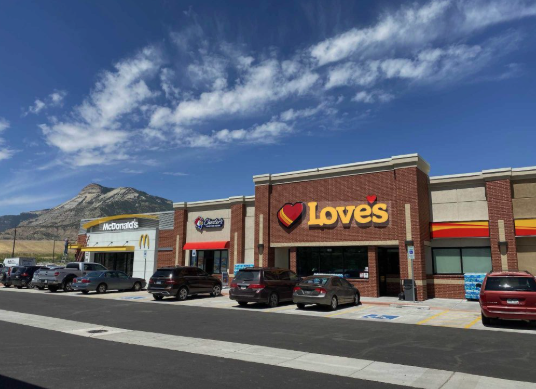
Love’s Travel Stops Continue Expanding RV Services
Love’s Travel Stops have quietly become one of the most RV-friendly travel networks in the country.
Many locations now offer:
- Dedicated RV parking
- Dump stations
- Propane
- Overnight parking (where permitted)
- Tire services
- Basic RV repairs
Love’s has also expanded partnerships for servicing Spartan motorhome chassis, something many dealerships aren’t authorized to perform.
For RV owners, this growing network means fewer worries when traveling long distances.
Having access to nationwide service locations can turn what might have been a trip-ending breakdown into a manageable inconvenience.
Forest River Is Investing in Customer Support
One encouraging trend Josh highlighted is Forest River’s investment in customer service.
The manufacturer recently launched a dedicated customer support center focused on helping existing owners, not just selling new RVs.
After only one year, the results are encouraging:
- Approximately 94% of incoming calls are answered without going to voicemail.
- Roughly one-third of owner issues are resolved over the phone without requiring dealership visits.
While no customer support system is perfect, investments like these represent an important shift in the RV industry.
For years, many owners have felt that support ended once the sale was complete. Programs like this suggest manufacturers are beginning to recognize that long-term ownership experience matters just as much as the initial purchase.
What Is “Hot Skin” and How Will New Safety Standards Help?
One of the most important safety updates coming to the RV industry has nothing to do with floorplans or luxury features, it has the potential to save lives.
It’s called Hot Skin.
Hot Skin occurs when an RV’s metal exterior becomes electrically energized due to a faulty electrical connection or an improperly grounded power source. If someone touches the RV while standing on the ground, they can receive an electrical shock. In rare cases, Hot Skin incidents have resulted in serious injuries and even fatalities.
While Hot Skin is uncommon, it’s a well-known electrical hazard within the RV community, especially when campers are plugged into damaged campground pedestals, improperly wired outlets, or generators with grounding issues.
A New Safety Standard Is Coming
To reduce the risk of Hot Skin incidents, the RV industry is adopting Ground Monitor Interrupter (GMI) technology.
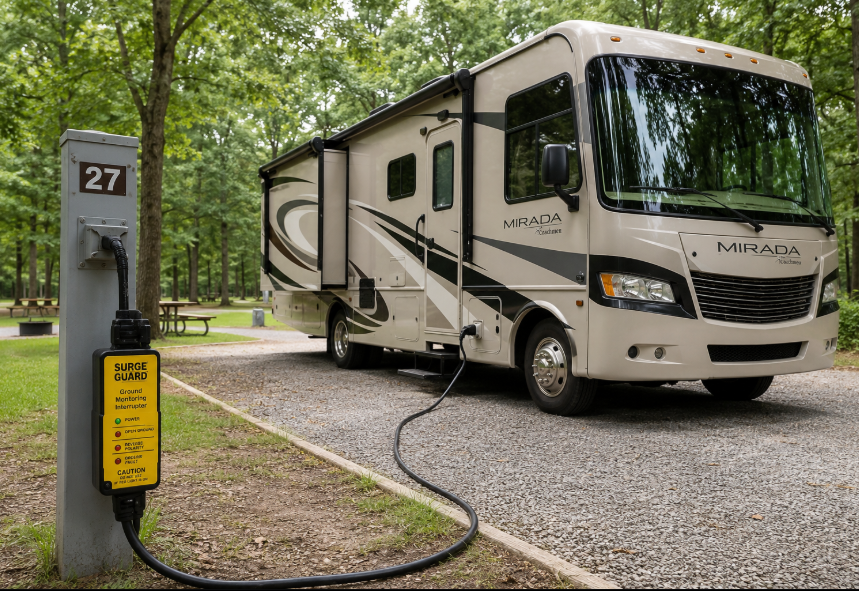
A Ground Monitor Interrupter continuously monitors the RV’s electrical system and verifies that a proper ground connection exists. If it detects a dangerous grounding fault, it can interrupt power before the RV’s exterior becomes energized.
The technology was originally expected to become standard on many 2027 model-year RVs, but implementation was delayed because suppliers couldn’t produce enough GMI units to meet industry demand. The current expectation is that GMI protection will become standard beginning with many 2028 model-year RVs.
How RV Owners Can Protect Themselves Today
Even before GMI systems become standard, there are several steps every RV owner can take to improve electrical safety:
- Use a quality surge protector or Electrical Management System (EMS) every time you plug into shore power.
- Inspect campground power pedestals for damage before connecting.
- Never bypass damaged electrical equipment or adapters.
- If you ever feel even a slight shock when touching your RV, disconnect power immediately and have the electrical system inspected before using it again.
- Have your RV’s electrical system inspected as part of your regular maintenance routine.
Like seat belts and smoke detectors, electrical safety features are easy to overlook, until they’re needed. The addition of Ground Monitor Interrupter technology represents one of the most significant electrical safety improvements the RV industry has introduced in years, giving future RV owners an extra layer of protection wherever their travels take them.
Encore RV Continues to Grow
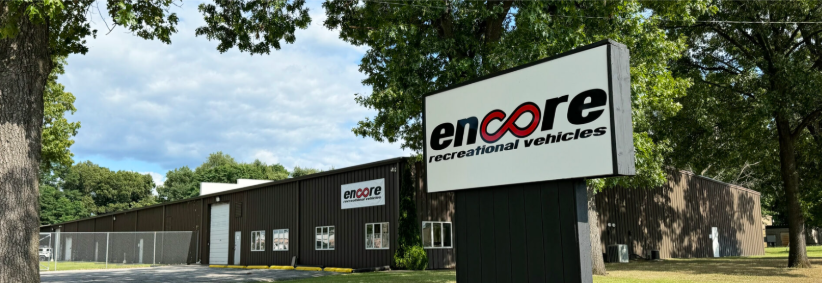
Adventure-focused RVs continue gaining popularity, and Encore RV is one manufacturer capitalizing on that trend.
Founded in 2021, Encore has quickly expanded into a larger production facility while focusing on lightweight campers built for off-grid adventures rather than traditional campground camping.
Although Encore remains a relatively young manufacturer, its continued growth reflects increasing demand for rugged, adventure-ready travel trailers designed for national parks, public lands, and dispersed camping.
What Does a Top 50 RV Dealer Award Really Mean?

Every year you’ll see dealerships proudly advertising that they’ve been named a “Top 50 RV Dealer.”
While receiving the recognition is certainly an accomplishment, it’s important to understand what the award actually represents.
Generally, these awards recognize dealerships based on factors like:
- Sales volume
- Business performance
- Customer programs
- Industry participation
However, shoppers shouldn’t assume an award automatically means one dealership will provide a better buying experience than another.
Make sure to consider:
- Customer reviews
- Service department reputation
- Pricing transparency
- Warranty support
- Communication
- Long-term customer satisfaction
Awards can be helpful, but they’re only one piece of the puzzle.
What These Trends Mean for RV Buyers
Today’s RV market looks very different than it did just a few years ago.
Although manufacturers continue adjusting production and sales remain softer than during the pandemic boom, buyers have several advantages:
- More inventory to choose from
- Strong trade-in values on late-model used RVs
- Continued innovation in safety and technology
- Better campground availability
- Opportunities to negotiate on new inventory
For many shoppers, 2026 could be one of the best times in recent years to purchase an RV.
Frequently Asked Questions
Are RV prices expected to drop in 2026?
Pricing depends on inventory, manufacturer incentives, financing costs, and dealer inventory levels. While softer demand may create opportunities, prices vary by brand and model.
Are used RVs worth buying?
Late-model used RVs continue to be popular because they often provide many of the same features as new models at a lower purchase price.
Why are RV manufacturers combining brands and factories?
Slower production has encouraged manufacturers to consolidate facilities, reduce costs, and improve manufacturing efficiency.
Are 2027 RVs already available?
Yes. Many manufacturers have already begun shipping 2027 models, although product updates vary by brand.
Will interest rates come down soon?
No one knows for certain. While many economists anticipated rate cuts, future decisions will depend on inflation, Federal Reserve policy, and broader economic conditions.
Will campgrounds be easier to book this year?
Early trends suggest yes. Improved cancellation policies and fewer speculative reservations are making campsites more available than they were during the peak travel years.
Final Thoughts
The RV industry is constantly evolving, and 2026 is proving to be another year of meaningful change. Manufacturers are adjusting to a slower market, technology continues to improve, customer support is receiving renewed attention, and buyers have more opportunities than they’ve had in several years.
Whether you’re shopping for your very first camper, considering trading into a newer model, or simply watching where the industry is headed, understanding these trends can help you make more informed decisions and shop with greater confidence.
Markets rise and fall, product lines evolve, and technology continues to improve, but one thing that will remain the same… the best RV is the one that fits your travel style, your budget, and your family’s adventures. Happy Camping!