
Nothing can ruin a camping trip faster than discovering a preventable problem after you’ve already hit the road.
Whether you’re towing a travel trailer, fifth wheel, or driving a motorhome, taking a few extra minutes to perform a complete RV departure checklist can help improve safety, prevent damage, and provide peace of mind before every trip.
From checking tire pressure and hitch connections to securing interior items and retracting slide-outs, a thorough pre-departure inspection helps ensure your RV is ready for the miles ahead.
In this guide, we’ll walk through the essential RV safety checks you should complete before towing your RV or leaving the campground.
Table of Contents
Why an RV Departure Checklist Matters
Exterior RV Safety Checklist
Tire & Wheel Inspection
Hitch & Towing Equipment Check
Utility Connections & Hookups
Slide-Outs, Awnings & Stabilizers
Lights, Brakes & Final Exterior Walkaround
Interior RV Departure Checklist
Securing Appliances & Utilities
Storage & Weight Distribution
Common RV Departure Checklist
FAQs
Why an RV Departure Checklist Matters

It’s easy to get excited about hitting the road and overlook something simple.
Unfortunately, many RV-related travel issues happen because a small step was missed during departure.
Common examples include:
- Driving away with stabilizer jacks down
- Forgetting to disconnect a water hose
- Leaving a roof vent open
- Not securing cabinet doors
- Towing with improperly inflated tires
A consistent road trip checklist routine can help reduce:
- Equipment damage
- Tire failures
- Water leaks
- Interior damage
- Safety hazards while traveling
The goal is to develop a process that becomes second nature every time you break camp.
Exterior RV Safety Checklist
Before stepping inside, start with a walkaround of your RV and tow vehicle.
This exterior inspection can help identify problems before they become expensive repairs or scary situations on the highway.
Exterior Checklist
✔ Check tire pressure and adjust as needed
✔ Inspect lug nuts and tighten if necessary
✔ Check fluid levels in the motorhome or tow vehicle
✔ Secure all exterior storage compartments
✔ Verify sewer outlet cap is installed
✔ Disconnect and store:
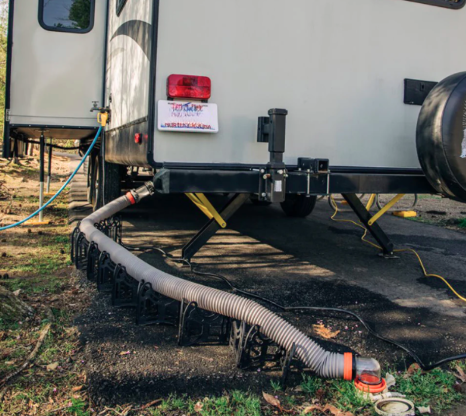
- Power cord
- Water hose
- Sewer hose
✔ Fill fresh water tank if needed for travel
✔ Turn off propane appliances
✔ Shut off propane supply at the tank
✔ Secure bike racks and bicycles
✔ Stow TV antennas and satellite equipment
✔ Retract slide-outs and engage travel locks
✔ Secure the awning
✔ Raise stabilizer jacks and leveling systems
✔ Retract entry steps
✔ Inspect underneath the RV for leaks or unusual conditions
Tire & Wheel Inspection
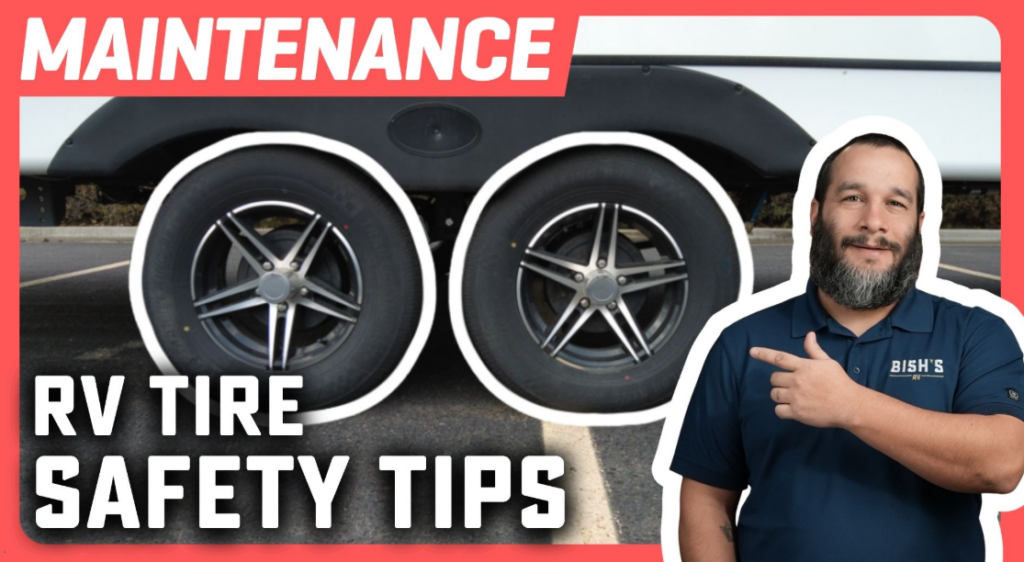
Your tires are one of the most important safety components on your RV.
Before every trip, take a few minutes to inspect:
Tire Safety Checklist
- Proper tire pressure
- Sidewall damage
- Uneven wear patterns
- Embedded debris
- Tire age
Also inspect wheel lug nuts and make sure they appear properly tightened.
Underinflated tires are one of the leading causes of RV tire failures, making this one of the most important steps on your departure checklist!
Hitch & Towing Equipment Check
If you’re towing a travel trailer or fifth wheel, your hitch connection deserves special attention.
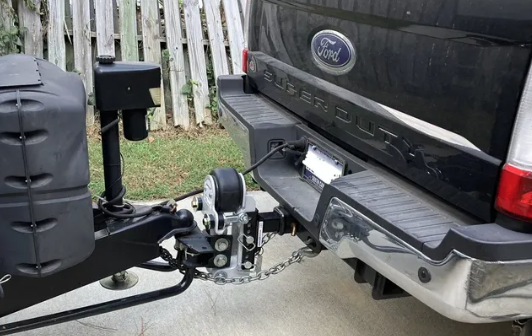
- Hitch coupler is properly secured
- Safety chains are attached
- Breakaway cable is connected
- Weight distribution equipment is secure
- Electrical connection is functioning properly
Many experienced RVers recommend physically touching each hitch component during their inspection to avoid overlooking anything.
Utility Connections & Hookups
One of the most common campground departure mistakes is forgetting a hookup.
Before leaving your campsite, make sure you’ve disconnected and properly stored:
Utilities Checklist
- Shore power cord
- Fresh water hose
- Sewer hose
- Water pressure regulator
- Surge protector
- External filters
Taking a moment to double-check these items can save you from damaged equipment, or an embarrassing campground exit.
Slide-Outs, Awnings & Stabilizers
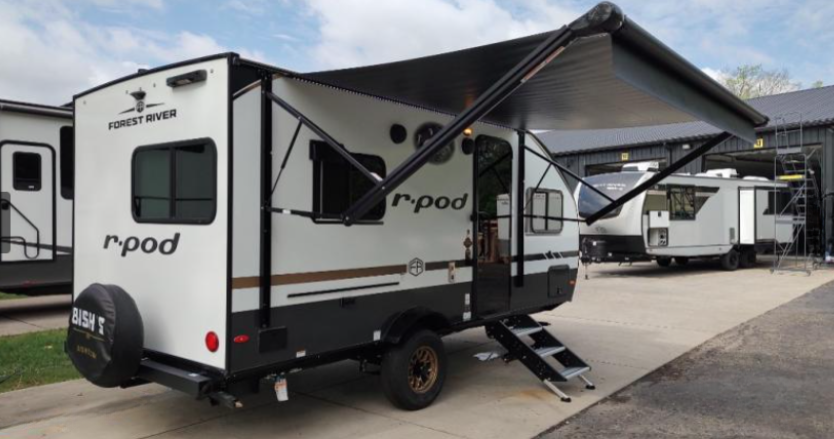
This section alone can prevent thousands of dollars in damage.
Before moving your RV:
Confirm:
✔ All slide-outs are fully retracted
✔ Travel locks are secured (if equipped)
✔ Awning is completely stowed
✔ Stabilizer jacks are raised
✔ Hydraulic leveling systems are retracted
✔ Entry steps are folded up
Many RV owners make it a habit to double check these items in a final walkaround.
Lights, Brakes & Final Exterior Walkaround
Before pulling away, make sure to test all safety systems.
Check:
- Running lights
- Turn signals
- Brake lights
- Headlights
- Trailer brakes
If possible, have someone assist while you test the lights.
Also verify:
- Registration is current
- License plates are secure
- Inspection or emissions stickers are valid (if required)
Finally, take one last complete walk around the RV. This final check often catches the small things that can be easily missed!
Interior RV Departure Checklist
Once the exterior is ready, move inside to prepare your RV for the road. Anything left unsecured can shift, fall, or become damaged while traveling.
Interior Checklist
✔ Secure loose items
✔ Store breakables safely
✔ Lock cabinet doors
✔ Close drawers
✔ Secure interior doors
✔ Check countertop items
The fewer loose items you leave out, the less likely you’ll arrive to a mess at your destination!
Securing Appliances & Utilities
Before hitting the road, shut down all the systems that don’t need to operate while traveling.
Appliance Checklist
- Turn off gas appliances
- Turn off electric appliances
- Extinguish pilot lights
- Turn off water pump
- Turn off unnecessary lights
- Turn off antenna booster
- Secure refrigerator contents
- Lock refrigerator and freezer doors
These simple steps help protect both your RV and its battery systems.
Storage & Weight Distribution
Proper weight distribution plays a major role in towing stability.
Before hitting the road:
Verify:
- Heavy items are stored low
- Cargo is secured
- Weight is balanced side-to-side
- Storage compartments are not overloaded
Uneven weight distribution can negatively affect:
- Handling
- Braking
- Tire wear
- Overall towing safety
Common RV Departure Mistakes
Even experienced RVers occasionally overlook something.
Some of the most common mistakes include:
- Leaving a roof vent open
- Forgetting to retract the antenna
- Driving away with wheel chocks installed
- Leaving stabilizer jacks down
- Forgetting to secure the refrigerator
- Not checking tire pressure
- Leaving loose items on countertops
The good news is, a consistent checklist helps eliminate most of these issues.
FAQs
What should I check before towing my RV?
You should inspect tires, hitch connections, lights, brakes, slide-outs, utility hookups, storage compartments, and interior cargo before every trip.
Should propane be turned off while towing?
Many RV owners turn off propane appliances and shut off the propane supply before traveling.
How often should I check tire pressure on my RV?
Tire pressure should be checked before every trip and adjusted according to the tire manufacturer’s recommendations.
Why is weight distribution important when towing an RV?
Proper weight distribution improves towing stability, braking performance, and tire life while reducing the risk of sway.
A Few Minutes Can Save a Lot of Headaches
A thorough RV departure checklist may only take 10 to 15 minutes, but it can help prevent costly repairs, damaged equipment, and stressful travel days.
The more consistently you follow a routine, the easier it becomes.
Before every trip, take a few extra minutes to walk around your RV, verify everything is secure, and confirm all systems are ready for travel.
Then all that’s left to do is adjust your mirrors, buckle up, and enjoy the journey ahead.

Written By: Brooke Erickson
Some say I am a writer, I like to say I am a storyteller