Every year, thousands of RV fires occur across the United States. While seeing images of burned RVs online can be alarming, the good news is that many of these fires are preventable with proper maintenance and regular inspections.
Many RV owners assume that cooking or propane systems are the biggest fire hazards, but the data tells a different story. In reality, the most common causes of RV fires are often related to maintenance issues that develop over time, not dramatic accidents at the campground.
Whether you’re traveling in a motorhome or towing a travel trailer or fifth wheel, understanding where fires typically start can help you protect your RV, your investment, and most importantly, your family.
Table of Contents
What Causes Most RV Fires?
Engine-Related Fires in Motorhomes
Running Gear Fires: Tires, Bearings, and Brakes
Preventative Maintenance is Your Best Defense
Why Every RV Needs a Pre-Trip Inspection
Electrical Problems That Can Lead to Fires
Fire Extinguisher Maintenance
What to Do if Your RV Catches Fires
RV Fire Statistics
FAQ
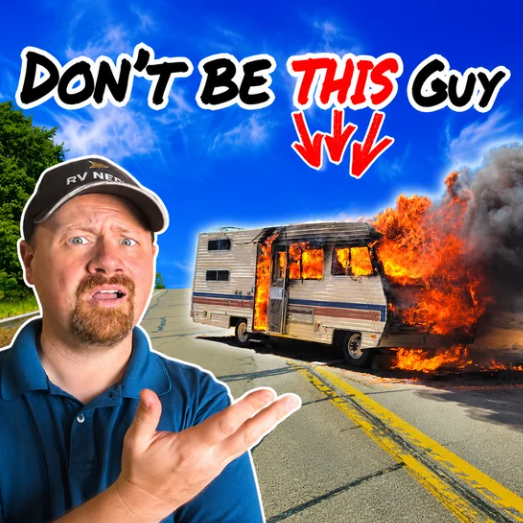
What Causes Most RV Fires?
One of the biggest misconceptions about RV safety is that cooking causes the majority of fires.
While stoves, ovens, and furnaces are certainly a cause, they actually account for less than 8% of RV fires, making them only the fourth most common cause.
Instead, the leading causes tend to fall into three categories:
- Mechanical failures
- Running gear problems
- Electrical issues
The encouraging news is that each of these areas can often be addressed through routine inspections and preventative maintenance.
Engine-Related Fires: Why Motorhomes Need Regular Exercise
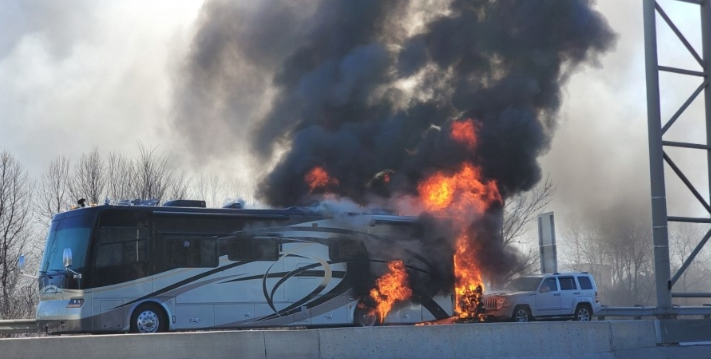
For motorized RVs, one of the leading causes of fires starts under the hood.
Over time, rubber hoses, seals, and fittings naturally age. When an engine sits unused for months, or even years, those components can dry out, crack, and eventually begin leaking fluids.
If those leaking fluids contact a hot exhaust component or engine surface, they can ignite.
Ironically, extremely low-mileage motorhomes can sometimes require more attention than coaches that are driven regularly.
Why?
Engines are designed to operate. Running the engine periodically helps:
- Circulate lubricants
- Keep seals conditioned
- Reduce dry rot
- Identify small leaks before they become major repairs
If you’re shopping for a used motorhome, don’t automatically assume fewer miles means fewer problems. Maintenance history is often just as important as mileage.
Running Gear Fires: One of the Biggest Fire Risks
Whether you own a motorhome, travel trailer, or fifth wheel, the running gear is one of the most common places for fires to begin.
Components that generate excessive heat include:
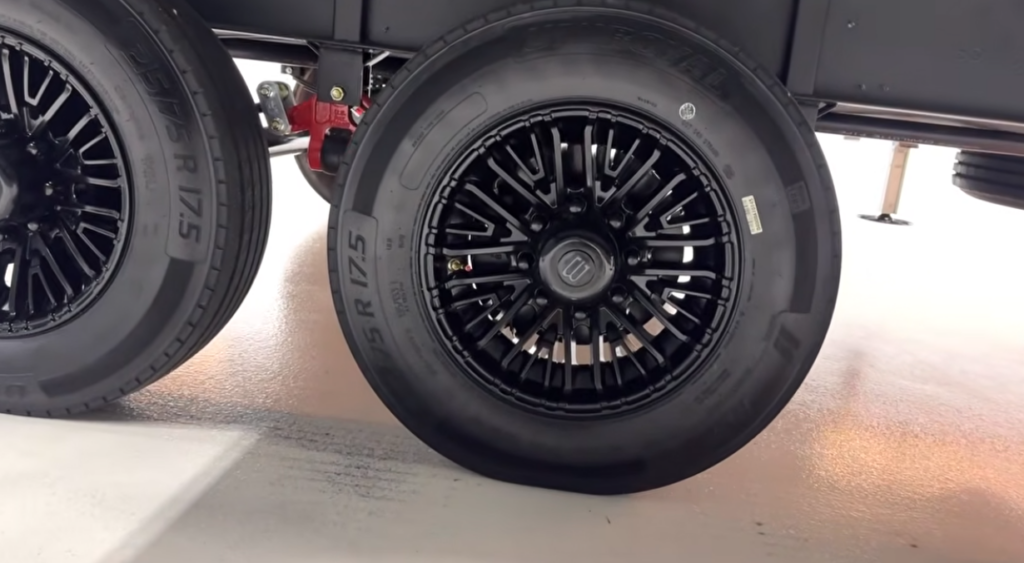
- Tires
- Wheel bearings
- Brakes
- Axles
If one of these systems overheats, the fire often begins at ground level before rapidly climbing into the RV itself.
Because heat naturally rises, a fire that starts underneath the coach can quickly spread into the flooring, walls, and living area.
Common causes include:
- Underinflated tires
- Overloaded axles
- Worn bearings
- Dragging brakes
- Mechanical failures
Fortunately, these problems often provide warning signs long before they become emergencies.
Preventative Maintenance Is Your Best Defense
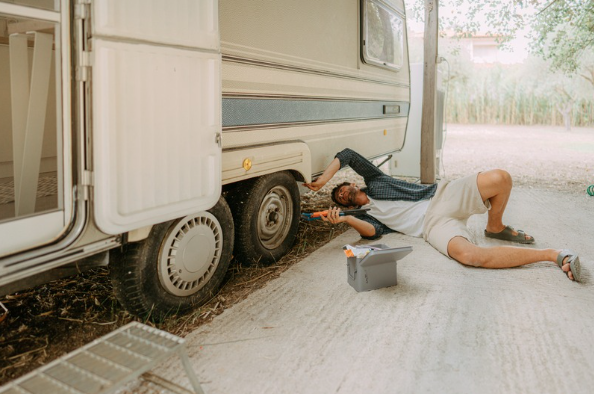
Most RV fires are preventable. Unfortunately, many new owners aren’t taught how to maintain their RV after purchase.
Instead, they’re handed the keys, given a walkthrough of the features, and sent on their way.
Routine maintenance should include:
- Roof inspections
- Tire inspections
- Wheel bearing service
- Brake inspections
- Electrical inspections
- Engine maintenance (motorhomes)
- Sealant inspections
- Appliance servicing
Many manufacturers have started improving owner education by including maintenance schedules inside cabinets or owner manuals, making it easier to stay on top of important service intervals.
Why Every Trip Should Start With a Walkaround
One of the easiest habits RV owners can develop is performing a pre-trip inspection before every departure.
This only takes a few minutes but can help identify small issues before they become expensive, or dangerous.
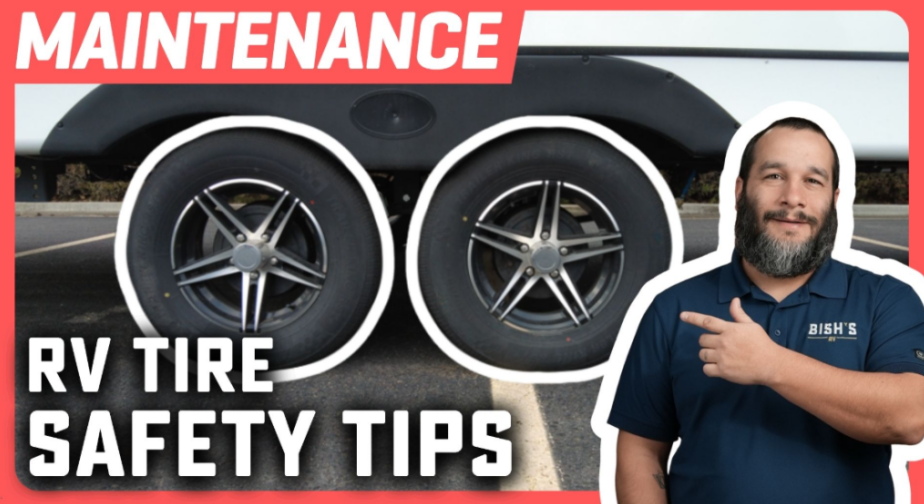
Before leaving:
✔ Check tire pressure (while cold)
✔ Inspect tires for cracking or uneven wear
✔ Check your spare tire
✔ Verify lights are working
✔ Confirm cargo is secured
✔ Look underneath for leaks
Continue the Inspection During Fuel Stops
Your inspection shouldn’t end once you’re on the road.
Every time you stop for fuel or a break:
- Walk around the RV.
- Look for anything unusual.
- Carefully feel near each tire and wheel (without touching obviously hot components) to check for excessive heat.
- Look for missing trim, damaged lights, or shifting cargo.
Uneven tire wear can also indicate suspension, alignment, or inflation problems that deserve immediate attention.
Electrical Problems Are More Common Than Many Owners Realize
Electrical issues account for approximately 15% of RV fires, making them one of the leading causes of preventable RV emergencies.
Areas to inspect regularly include:
- Shore power cord
- Power cord inlet
- Adapters
- Extension cords
- Transfer switches
- Battery connections
Watch for warning signs such as:
- Melted plastic
- Brown discoloration
- Burn marks
- Loose plugs
- Frayed insulation
- Burning odors
These can all indicate excessive heat buildup that should be addressed before using the RV again.
Fire Extinguisher Maintenance: Is Yours Ready When You Need It?
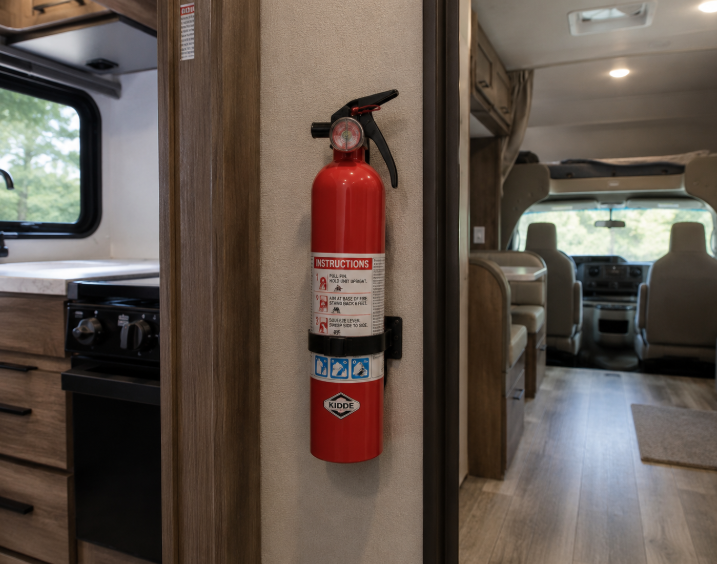
Every RV leaves the factory with at least one fire extinguisher, but simply having one onboard doesn’t guarantee it’ll work when you need it.
In fact, one of the most overlooked aspects of RV safety is maintaining the fire extinguisher itself.
Most RVs come equipped with a dry chemical fire extinguisher. Over time, the powder inside can settle and compact as the RV travels down the road, making it less effective, or even preventing it from discharging properly in an emergency.
How to Maintain Your RV Fire Extinguisher
Before each camping season, and periodically throughout the year, take a few minutes to inspect your extinguisher.
Here’s a simple checklist:
- Remove it from its mounting bracket.
- Gently shake or invert the extinguisher to help loosen the dry chemical powder inside.
- Check the pressure gauge to ensure it’s in the green operating zone.
- Tap the gauge lightly if the needle appears stuck.
- Inspect the hose and nozzle for damage or obstructions.
- Verify the expiration or replacement date.
Many RV owners never touch their extinguisher after taking delivery, only to discover years later that it has expired or isn’t functioning properly. Spending just a few minutes inspecting it could make a critical difference if an emergency ever occurs.
Propane Safety Tips Every RV Owner Should Know
Propane systems often get blamed whenever people hear about RV fires, but the reality is that propane-related fires are far less common than many people think.
That doesn’t mean propane safety should be ignored.
Before every trip, take a few moments to inspect:
- Propane hoses for cracking or wear.
- Regulators for corrosion or damage.
- Tank mounting brackets.
- Connections for leaks.
If you ever smell propane, don’t ignore it.
Turn off the propane supply immediately, avoid creating sparks or flames, and have the system inspected before using it again.
Many RV owners also choose to carry a simple propane leak detector spray, which can quickly identify leaks around fittings and connections.
Routine inspections are inexpensive, easy to perform, and can provide significant peace of mind before every camping trip.
What To Do If Your RV Catches Fire
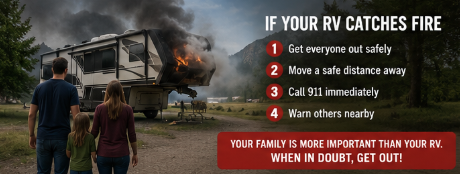
Despite your best efforts, emergencies can still happen.
If an RV fire starts, your first instinct may be to grab the fire extinguisher and try to save your camper.
However, your priorities should always be:
- Get everyone out safely.
- Move away from the RV.
- Call 911.
- Warn anyone nearby.
RVs contain a significant amount of combustible materials, including wood products, insulation, fabrics, plastics, and adhesives, which allow fires to spread incredibly quickly. In many cases, a fire can grow from a small flame to a fully involved RV in just a matter of minutes.
If, and only if, you can do so safely, shutting off the propane cylinders may help reduce the fuel available to the fire. That’s one reason propane tanks are mounted in compartments that remain easily accessible during an emergency.
However, never put yourself in danger attempting to save the RV.
Your RV can be replaced. Your family cannot. If the fire has already spread beyond a very small, manageable area, the safest decision is to evacuate immediately and allow trained firefighters to handle the situation.
Additional Fire Prevention Tips for Every RV Owner
Beyond routine maintenance and inspections, a few simple habits can dramatically reduce your risk of experiencing an RV fire.
Install and Test Smoke Alarms
Test smoke detectors before each trip and replace batteries at least once a year—or sooner if the detector indicates low power.
Replace Carbon Monoxide and LP Gas Detector Batteries
Many RVs include combination detectors that monitor both propane leaks and carbon monoxide. These safety devices have a limited lifespan and should be replaced according to the manufacturer’s recommendations.
Keep Emergency Exits Accessible
Don’t block emergency exit windows with storage bins, furniture, or bicycles.
Every family member should know:
- Where emergency exits are located.
- How to open them.
- Where to meet outside the RV if an evacuation is necessary.
Keep Combustibles Away From Heat Sources
Avoid storing paper towels, cooking oils, cleaning supplies, or other flammable materials near:
- The stove
- Furnace vents
- Water heater
- Portable heaters
Good organization isn’t just convenient, it can also improve safety.
Carry More Than One Fire Extinguisher
Most RVs only come with a single fire extinguisher near the entry door.
Many experienced RVers choose to add:
- A second extinguisher in the bedroom.
- A small extinguisher in an exterior storage compartment.
- One in the tow vehicle or motorhome cab.
Having additional extinguishers provides options if one area of the RV becomes inaccessible during an emergency.
RV Fire Statistics: Why Prevention Matters
Fortunately, RV fires remain relatively uncommon compared to the millions of RV trips taken every year.
However, when they do occur, the consequences can be devastating.
According to Josh the RV Nerd, statistically:
- Approximately 4,000 RV fires occur every two years.
- RV fires result in an average of 15 deaths annually.
- Approximately 125 injuries occur each year.
- Property losses total roughly $60 million annually.
While those numbers are sobering, they also reinforce an encouraging message:
Many of the most common causes, mechanical failures, overheating running gear, and electrical issues, can often be identified long before they become emergencies.
Routine inspections and preventative maintenance remain the most effective ways to reduce your risk.
Frequently Asked Questions
What is the most common cause of RV fires?
The leading causes of RV fires are typically related to mechanical failures, overheating tires or wheel bearings, and electrical issues, not cooking or propane appliances.
How often should I inspect my RV before traveling?
A quick pre-trip walkaround should be performed before every trip, with a more thorough inspection completed at the beginning of each camping season and according to your RV manufacturer’s maintenance schedule.
Should I check my spare tire?
Yes. Many RV owners remember to inspect the tires on the ground but forget about the spare. A spare tire with low pressure or dry rot may not be usable when you need it most.
How can I tell if my RV has an electrical problem?
Watch for warning signs such as melted plugs, discoloration around electrical connections, burning odors, loose outlets, or unusually warm power cords.
Is it safe to use my RV fire extinguisher if it’s several years old?
Inspect the expiration date, pressure gauge, and overall condition. If the extinguisher is expired, damaged, or doesn’t maintain proper pressure, replace it immediately.
Are propane fires common in RVs?
Propane systems deserve routine inspections, but they account for fewer fires than many owners assume. Regular maintenance and leak checks significantly reduce the risk.
Should I try to put out an RV fire myself?
Only if the fire is very small and you can do so safely. Your first priority should always be evacuating everyone, moving a safe distance away, and calling emergency services.
Final Thoughts
While RV fires can be frightening, they are often preventable with the right combination of maintenance, awareness, and preparation.
By taking a few extra minutes before each trip to inspect your tires, running gear, electrical connections, and safety equipment, you can significantly reduce the risk of experiencing a fire on the road. Those simple habits don’t just help protect your RV they help protect everyone traveling with you.
At the end of the day, RV ownership is about creating unforgettable memories with family and friends. Staying proactive with routine maintenance and safety inspections helps ensure those memories are filled with adventures around the campfire, not emergencies on the side of the highway.