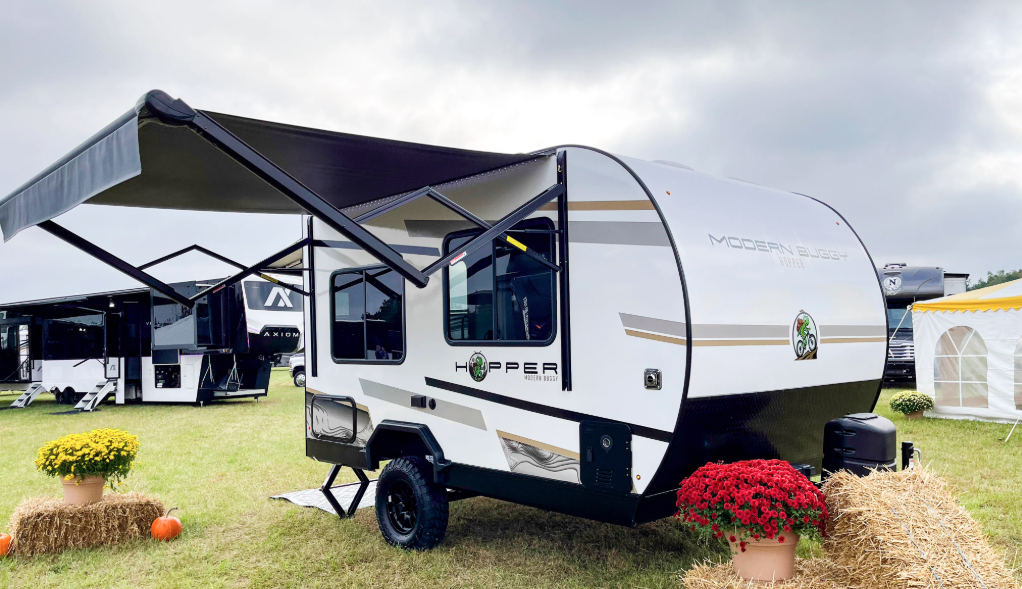
Let’s be honest, the RV industry isn’t exactly known for reinventing the wheel.
Every year, manufacturers release new floorplans that often look suspiciously similar to the floorplans that came before them. Sometimes the changes are meaningful, and sometimes it’s just moving a cabinet six inches and calling it new.
The Modern Buggy Hopper feels a little different. And it’s not because it’s the biggest camper on the market, the fanciest, or a luxury fifth wheel. Instead, the Hopper was designed around a simple idea:
Build a lightweight camper that gave people more flexibility, better materials, and practical features without making it unaffordable!
The result is a lineup of four compact travel trailers that focus on versatility, cargo capacity, lightweight towing, and smart design.
In this review, we’ll take a closer look at:
- The Hopper story
- Hopper 1, 2, 3, and 4 floorplans
- Construction and materials
- Cargo and storage solutions
- Who the Hopper is designed for
- What makes it different from other lightweight campers
Let’s hop into it!
Table of Contents
What Is the Modern Buggy Hopper
The Story Behind the Hopper
Hopper 1 Overview
Hopper 2 Overview
Hopper 3 Overview
Hopper 4 Overview
Construction & Build Quality
Smart Features Throughout the Lineup
Who Should Consider a Hopper
Pros and Cons
FAQs
Why is the Hopper Worth Watching
What Is the Modern Buggy Hopper?
The Hopper is a series of lightweight travel trailers developed through a partnership between Bish’s RV and Modern Buggy. The lineup currently includes four models:
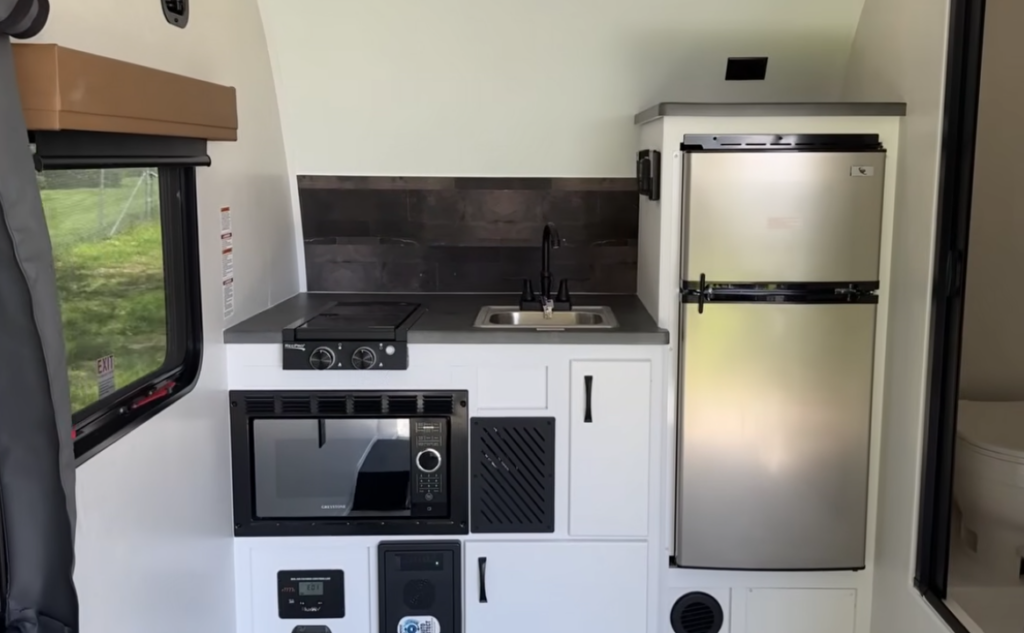
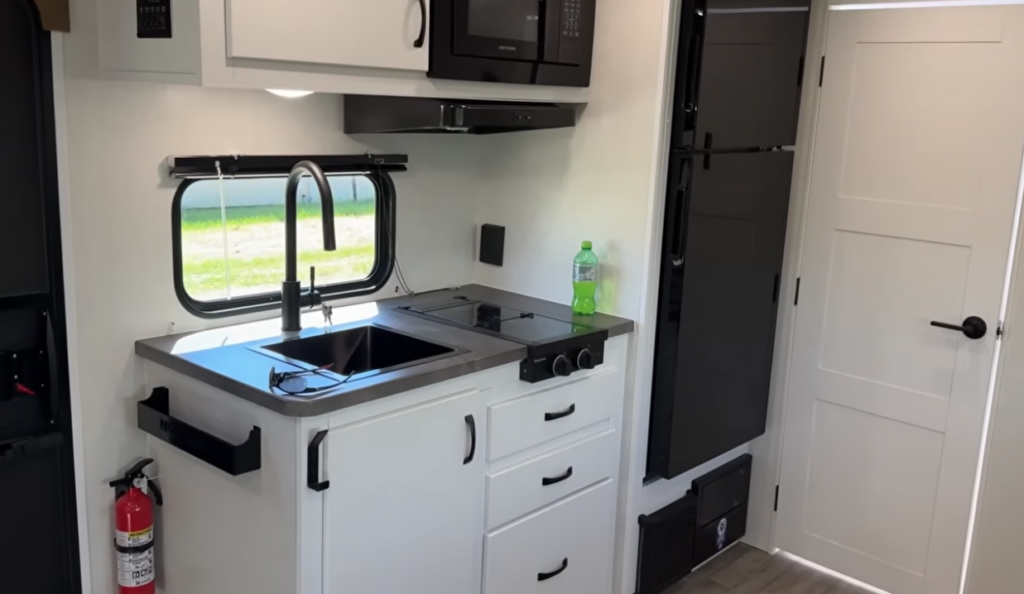
- Hopper 1
- Hopper 2
- Hopper 3
- Hopper 4
Each model was designed around the idea of maximizing function while keeping weight and cost under control.
Instead of trying to pack every possible feature into a small camper, the Hopper focuses on:
- Flexible living spaces
- Practical storage
- Better-than-expected cargo capacity
- Lightweight towing
- Durable materials
The goal isn’t to be everything to everyone. It’s to be useful.
The Story Behind the Hopper
One of the most interesting things about the Hopper isn’t the camper itself, it’s how it came to be.
The Hopper started as part of Bish’s RV’s Wayfinder lineup, a series of exclusive RV concepts designed around customer feedback and real-world camping experiences.
As the concepts evolved, Bish’s partnered with Modern Buggy to bring them to life. But instead of keeping the Hopper exclusive, the decision was made to open the lineup to the broader RV market.
Why? Because larger production volumes help lower costs, and lower costs make RV ownership more accessible. This is a fairly unusual approach in an industry where exclusivity is often the goal.
Hopper 1: Small, Simple, and Surprisingly Functional
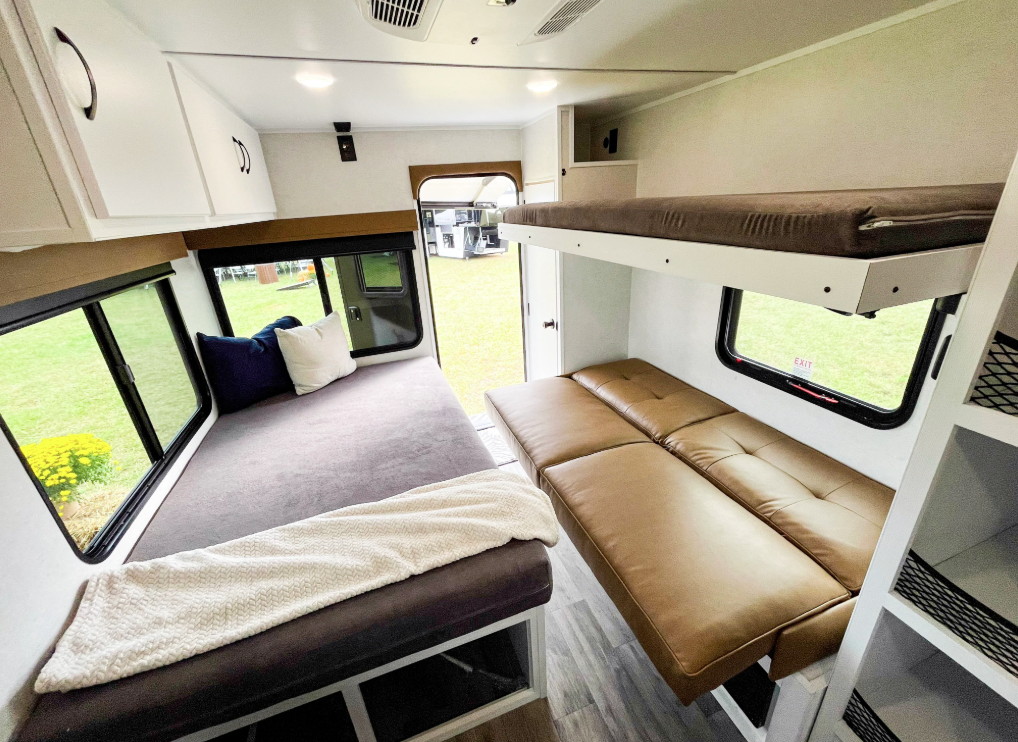
The Hopper 1 traces its roots back to a Bish’s-exclusive floorplan called the Cloud Breaker.
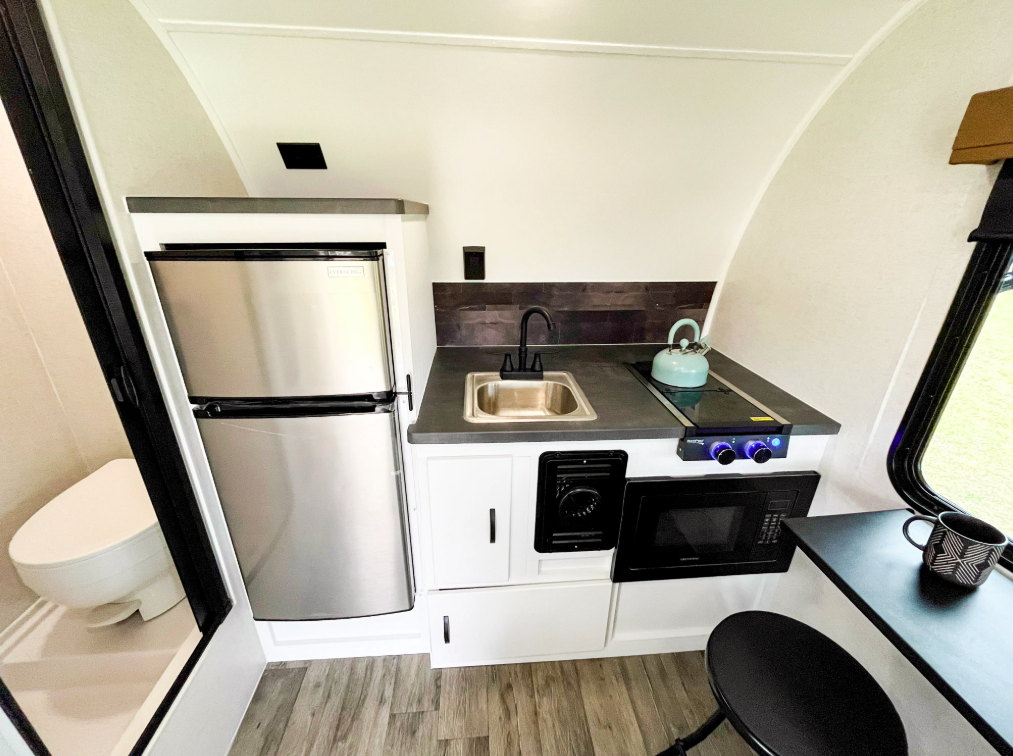
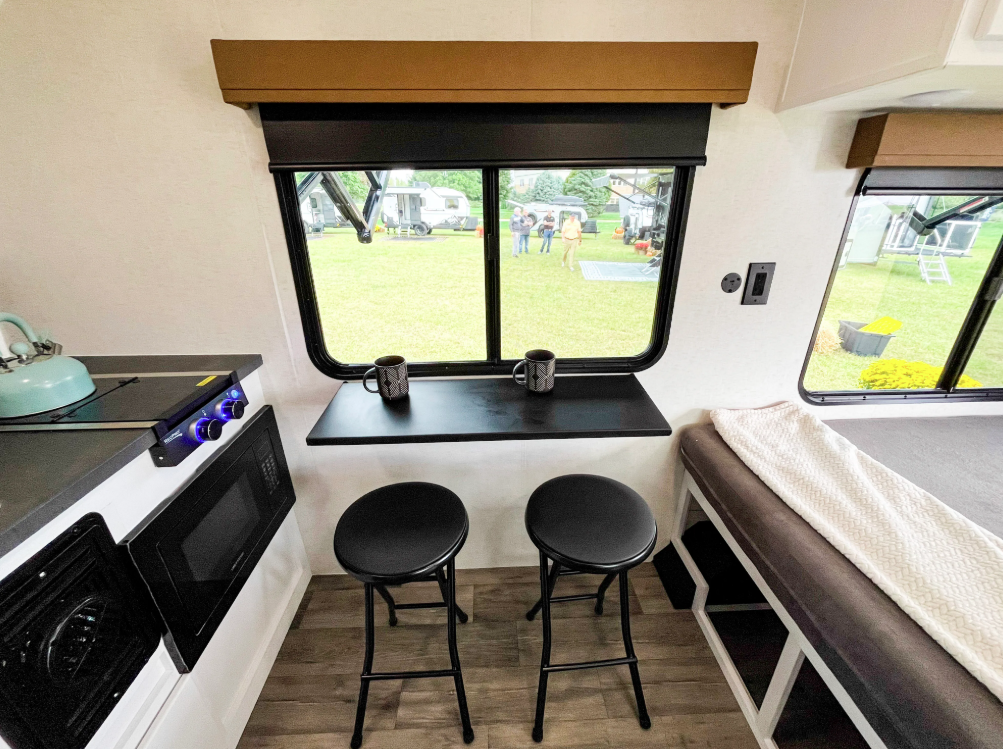
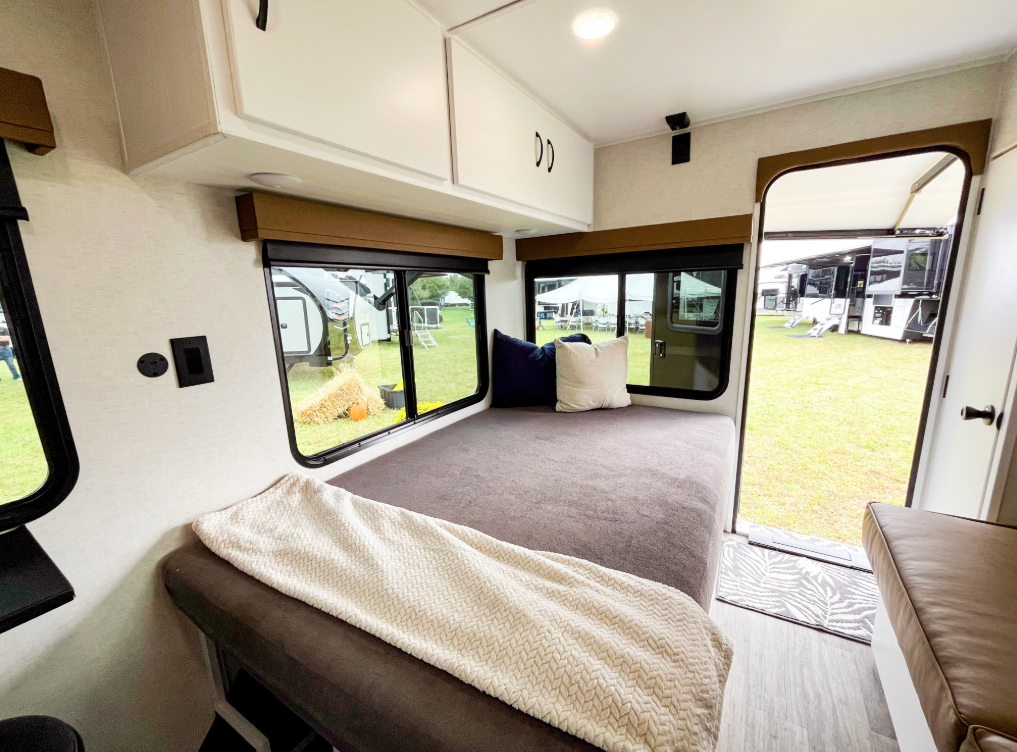
This model focuses on:
- Lightweight towing
- Flexible sleeping arrangements
- Large windows
- Strong cargo capacity
- Excellent awning coverage
One thing that immediately stands out is how much natural light the Hopper 1 brings inside.
For such a compact camper, the window coverage is impressive, helping the interior feel larger than the actual footprint would suggest.
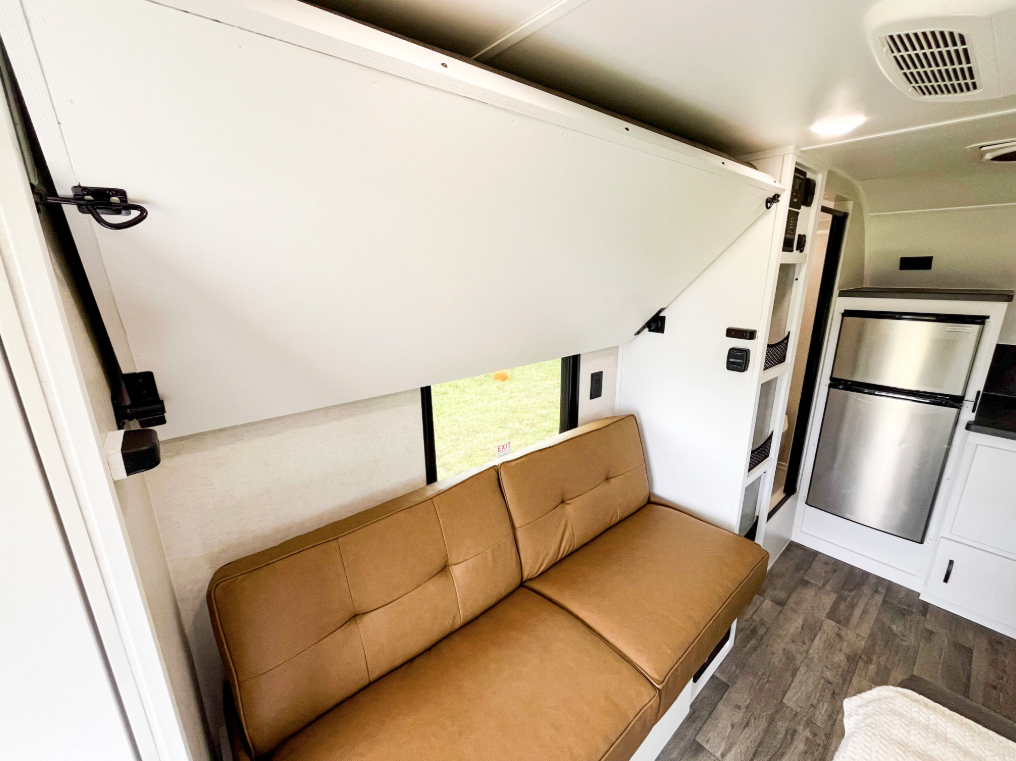
It’s a great option for:
- Solo travelers
- Couples
- Small families
- Weekend campers

Hopper 2: The Smaller Hauler
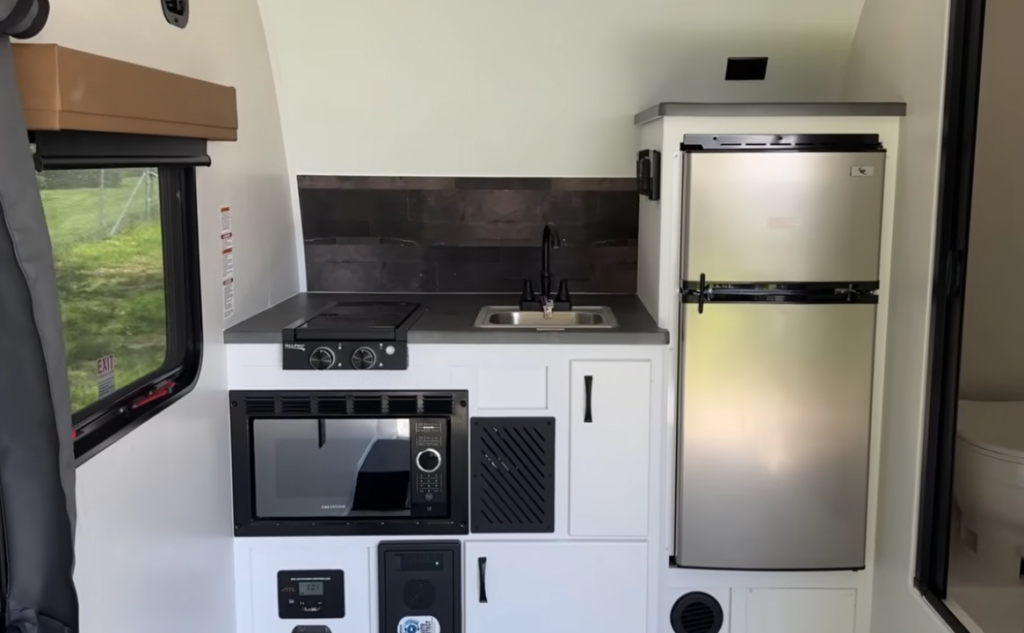
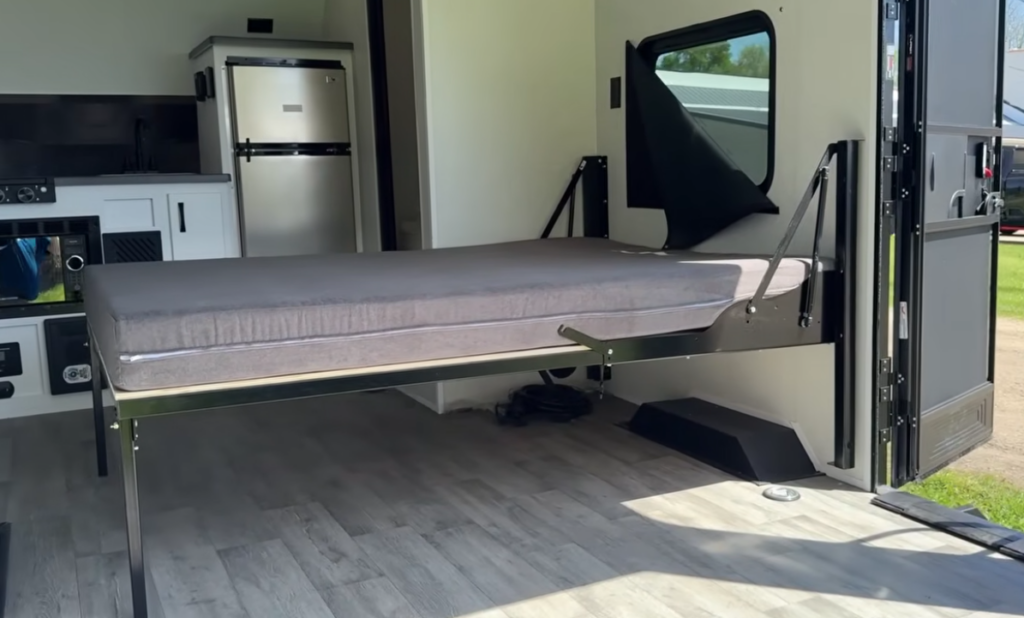
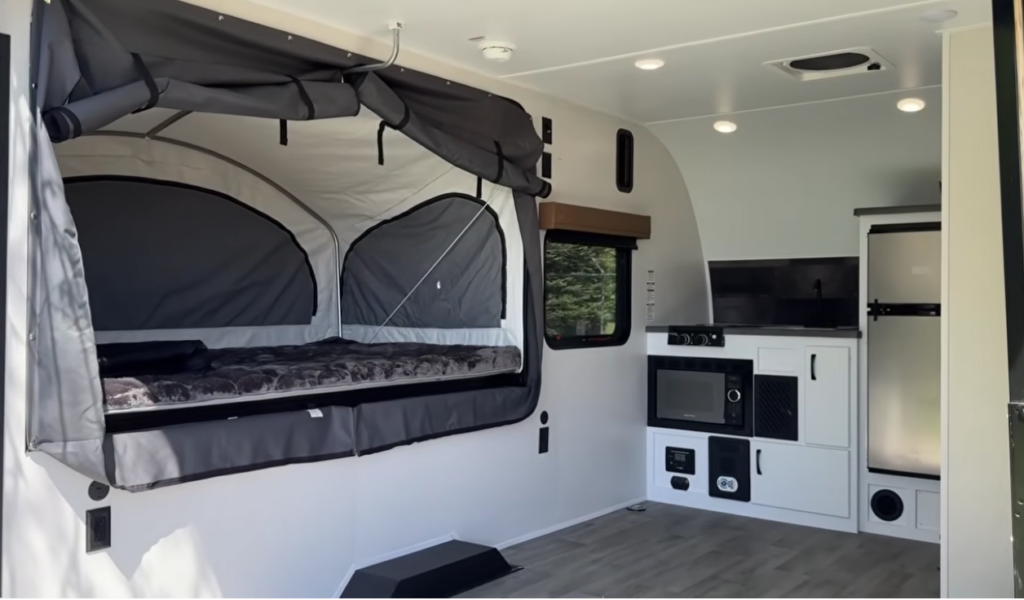
If Hopper 1 focuses on flexible camping, Hopper 2 leans into utility. Josh describes it as a “smaller hauler,” and that’s exactly what it feels like. The rear ramp design creates cargo flexibility that’s hard to find in this size category.
Hopper 2 Highlights
- Rear cargo loading capability
- Fold-out side sleeping area
- 200-watt solar package
- 8-foot-wide body
- Lightweight towing characteristics
This isn’t a toy hauler designed for giant side-by-sides.
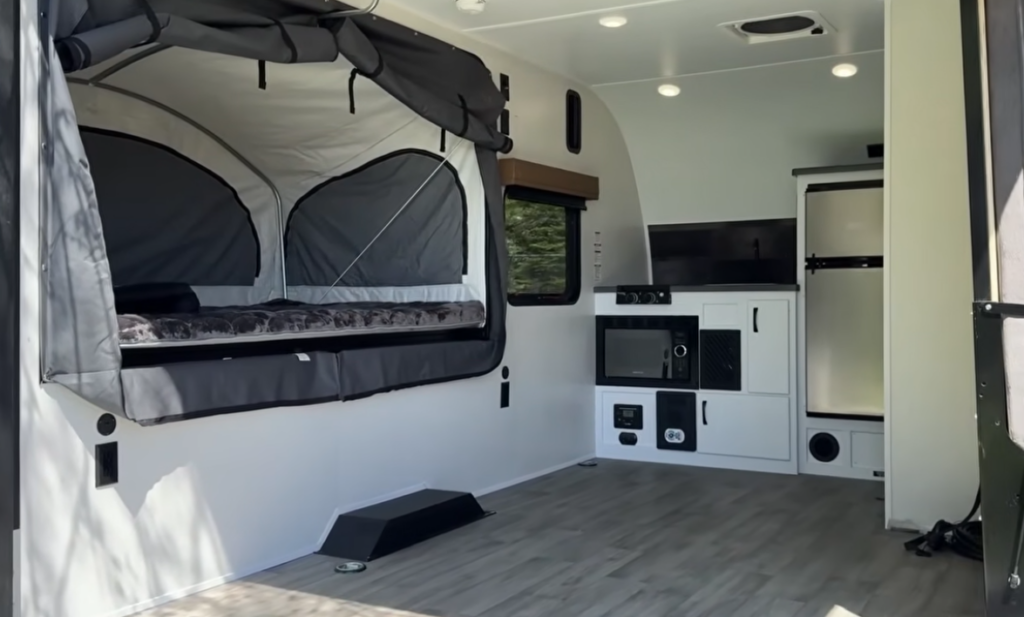
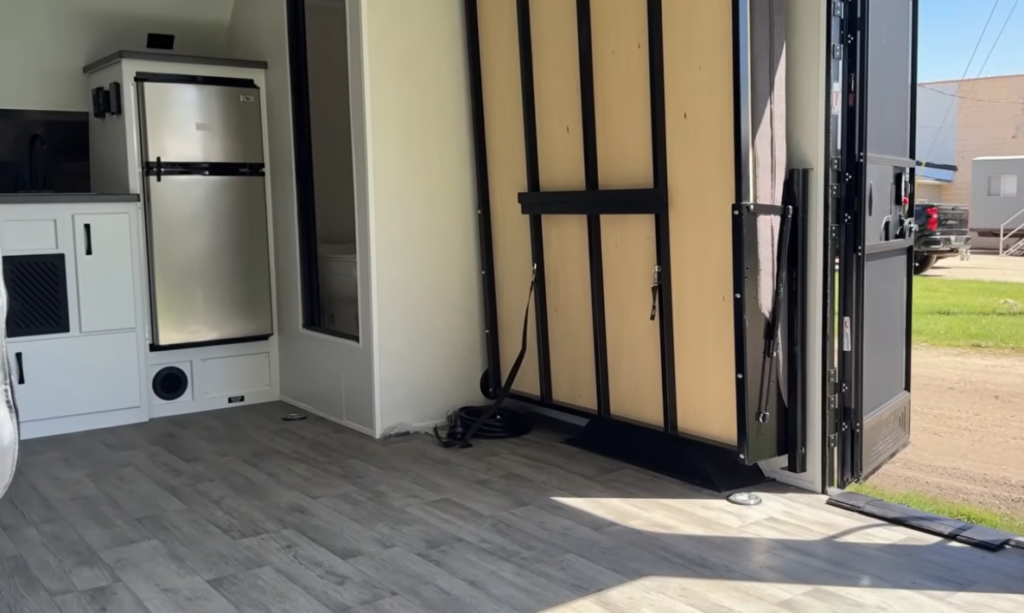
Instead, it’s a lightweight camper for people who want to bring:
- E-bikes
- Kayaks
- Camping gear
- Outdoor equipment
without jumping into a much larger RV.
Hopper 3: Family-Friendly Flexibility
The Hopper 3 starts moving into more traditional travel trailer territory, but with a few clever concepts.
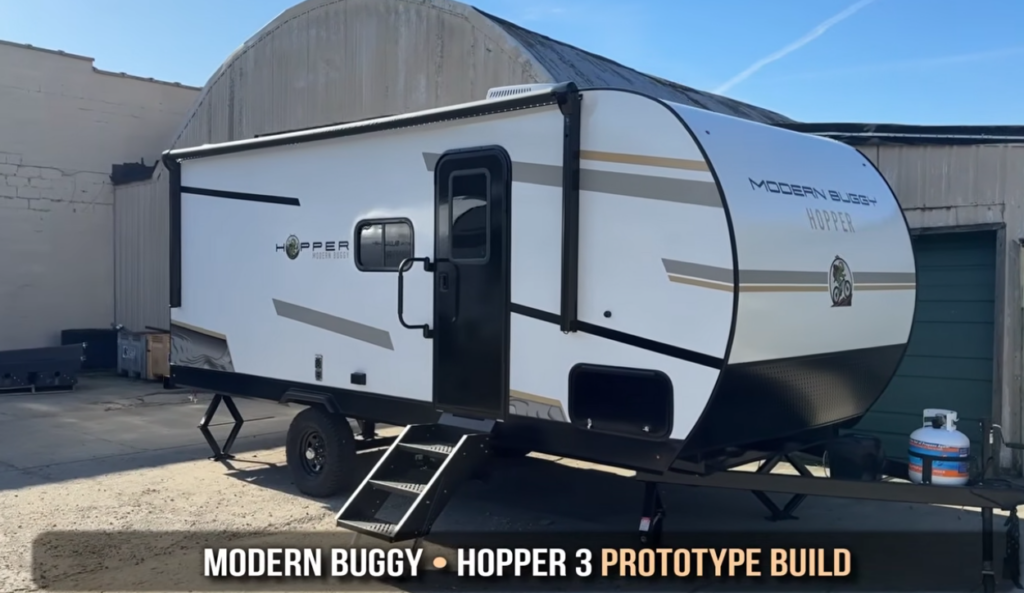
One of the biggest themes throughout the Hopper lineup is flexibility, and Hopper 3 may showcase that better than any model.
Features include:
- Convertible cargo bunk concepts
- Larger beds than many competitors
- Heavy-duty welded bunk ladder
- Enclosed underbelly
- 200-watt solar package
- Full 8-foot-wide body design
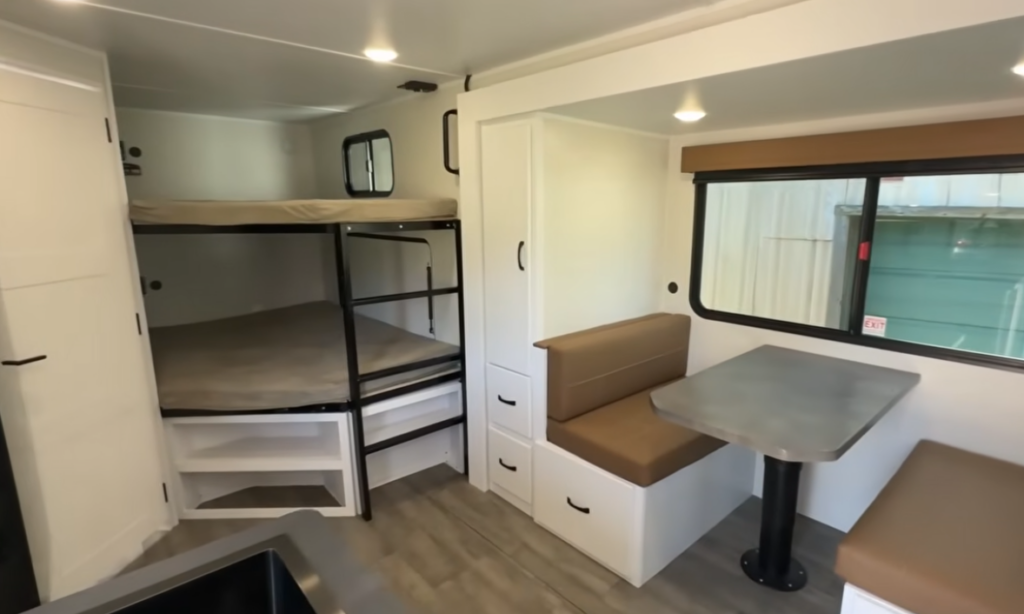
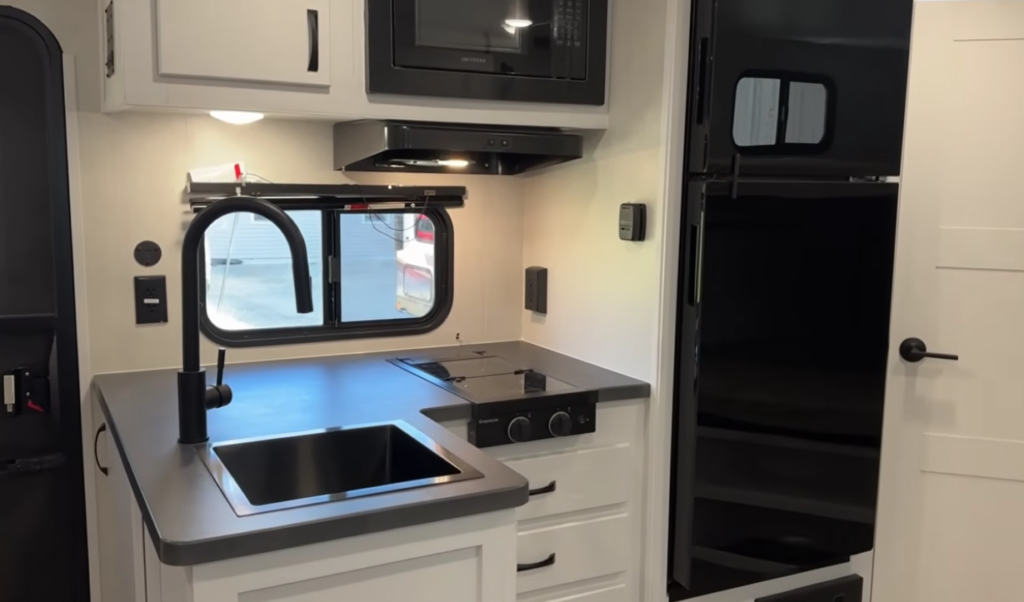
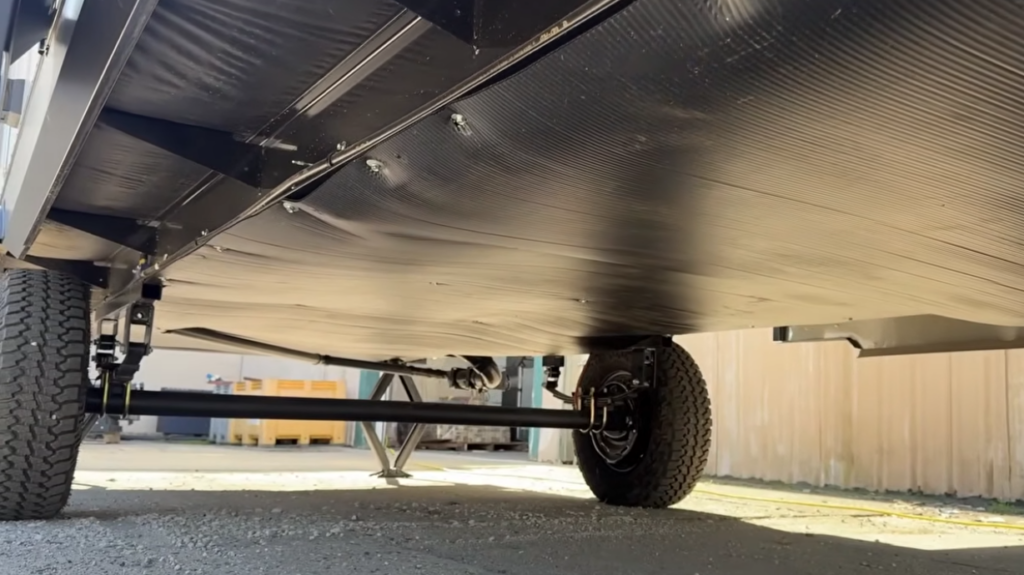
The goal with this model is to give campers more ways to use the space. Need bunks? Great. Need indoor bike storage? It has that too!
The Hopper 3 was designed to adapt to how people actually camp.
Hopper 4: Big-Camper Feel Without Big-Camper Weight
The Hopper 4 may end up being the sleeper hit of the lineup.
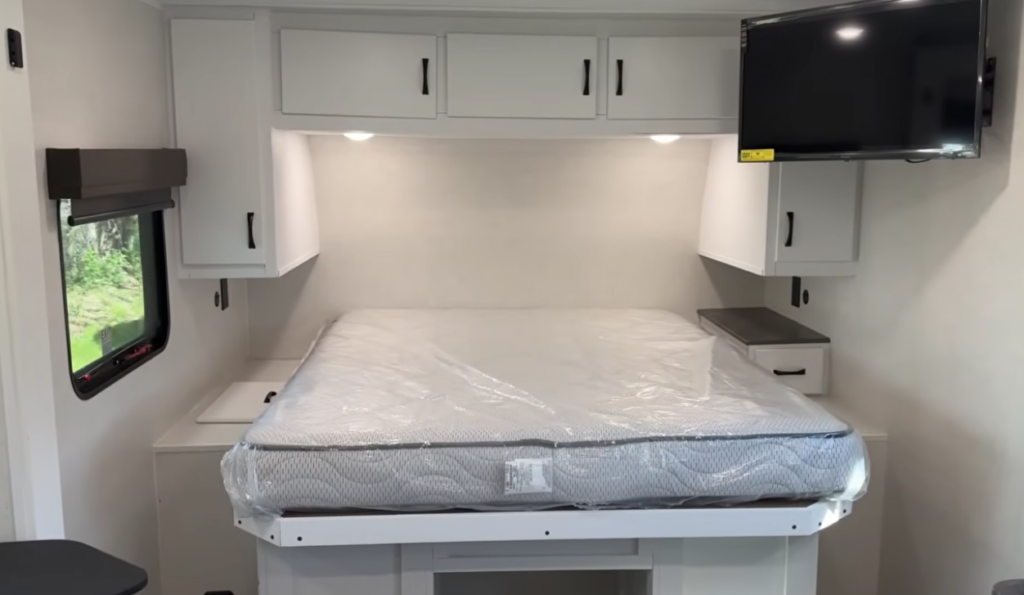
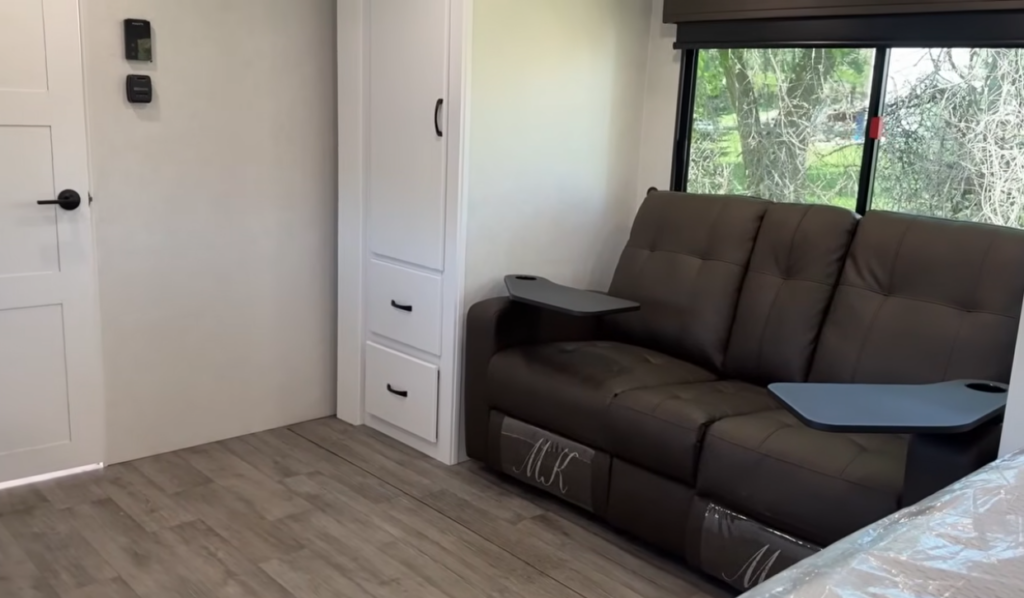
Even though it’s built on a single-axle platform, it feels much larger once you’re inside.
That’s partly due to:
- The slide room
- North-south bed orientation
- Flexible storage areas
- Generous cargo capacity
In fact, Hopper 4 offers roughly 1,100 to 1,200 pounds of cargo carrying capacity, which is impressive for a lightweight camper in this segment.
For couples looking for a comfortable travel trailer without moving into a larger tandem-axle RV, the Hopper 4 deserves a closer look!
Construction & Build Quality
One area where the Hopper lineup separates itself from many lightweight competitors is construction.
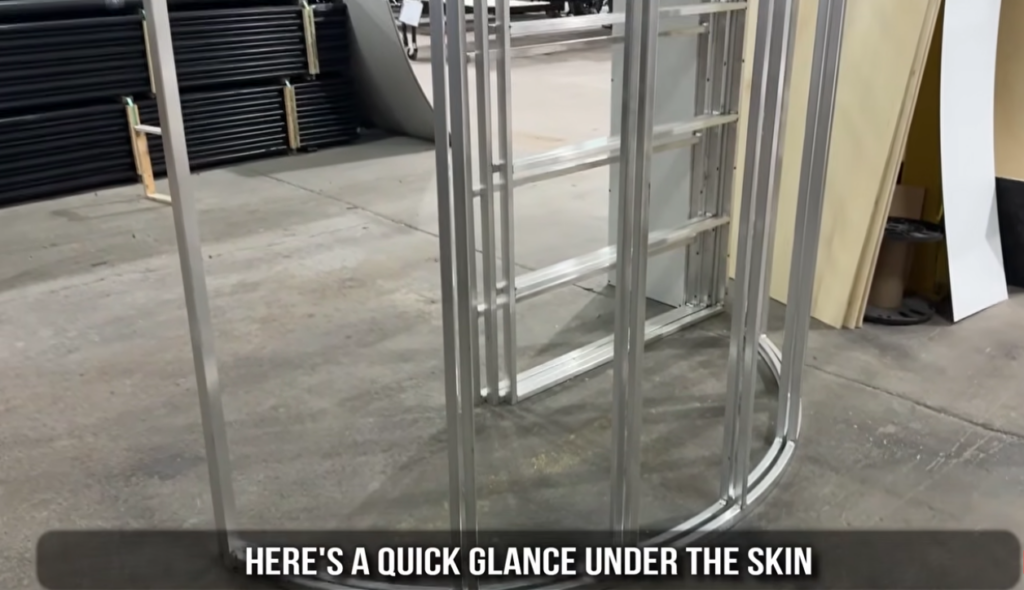
Modern Buggy uses:
- Welded aluminum front structure
- Double Azdel wall construction
- Fiberglass exterior materials
- Enclosed underbelly designs on select models
This combination helps balance:
- Weight
- Durability
- Cost
without dramatically increasing the price point.
Why Azdel Matters
Azdel composite panels are often used in higher-end RV construction because they help reduce:
- Water absorption
- Rot concerns
- Delamination risks
compared to traditional wood-backed wall systems.
Smart Features Throughout the Hopper Lineup
The Hopper wasn’t designed to overwhelm campers with flashy gadgets. Instead, many of the best features are the practical ones.
Examples include:
- Large awning coverage
- Oversized cargo capacity
- Better vent fans
- Flexible storage solutions
- Larger-than-average beds
- Solar packages
- Heavy-duty bunk systems
- Thoughtful power outlet placement
They’re the kinds of features you appreciate more the longer you own the RV.
Who Should Consider a Modern Buggy Hopper?
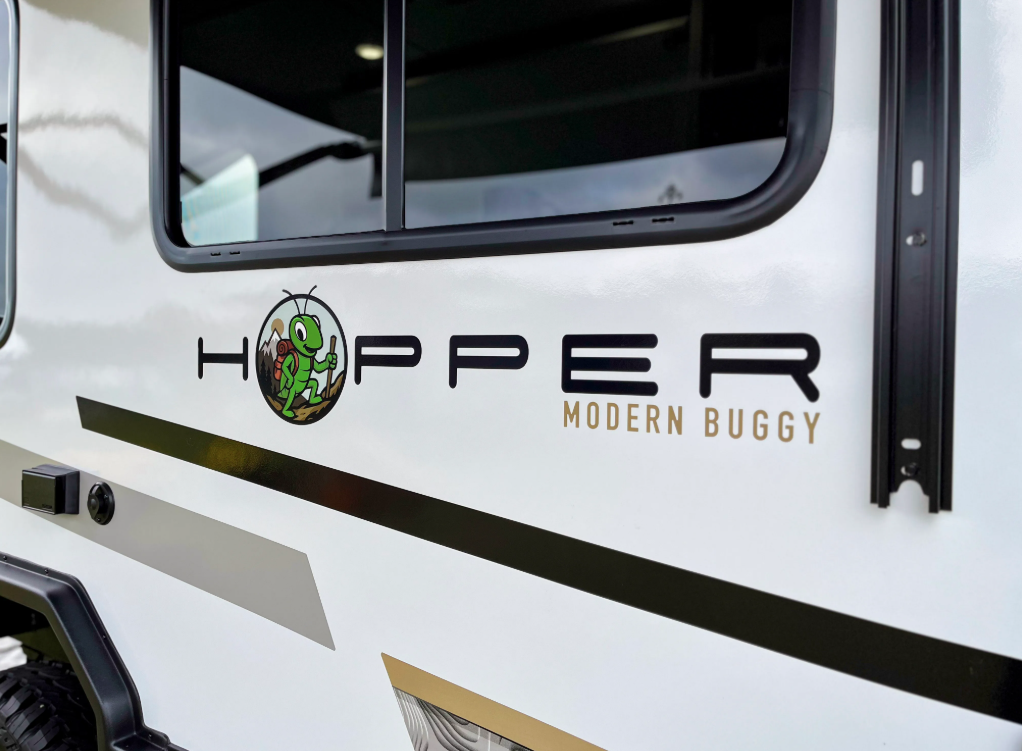
The Hopper lineup makes the most sense for buyers who want:
Great For
- First-time RV owners
- Couples
- Small families
- Adventure travelers
- E-bike owners
- Lightweight tow vehicle owners
Probably Not Ideal For
- Full-time RV living
- Luxury-focused buyers
- Large families
- Long-term destination camping
Pros and Cons
Pros
- Lightweight towing
- Flexible floorplans
- Strong cargo capacity
- Double Asdell wall construction
- Solar packages available
- Excellent value proposition
Considerations
- Smaller living spaces
- Limited luxury features
- Some models still evolving as production continues
- Not designed for large families
FAQs
What is the Modern Buggy Hopper?
The Hopper is a series of lightweight travel trailers developed through a partnership between Bish’s RV and Modern Buggy.
How many Hopper floorplans are available?
There are currently four models:
- Hopper 1
- Hopper 2
- Hopper 3
- Hopper 4
Is the Hopper designed for off-grid camping?
Many Hopper models include solar packages and cargo flexibility that make them appealing for off-grid adventures, though capabilities vary by model.
What makes the Hopper different from other lightweight campers?
The Hopper focuses heavily on flexibility, cargo capacity, lightweight towing, and practical features while maintaining affordability.
Why the Hopper Is Worth Watching
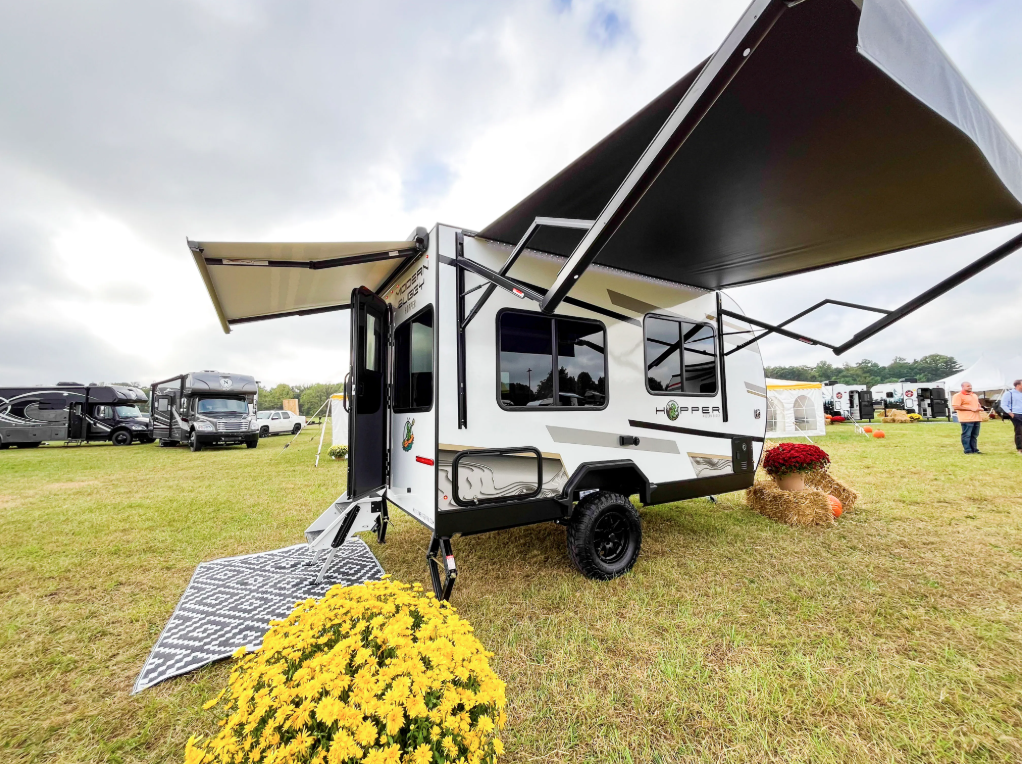
The Modern Buggy Hopper isn’t trying to be the biggest camper on the lot, but it’s useful and that’s part of the appeal.
Every model in the lineup seems to start with the same question:
“How can we give campers more functionality without making the RV bigger, heavier, or more expensive?”
The answer looks a little different depending on whether you’re looking at Hopper 1, 2, 3, or 4.
But the common theme remains the same:
- Lightweight
- Flexible
- Practical
- Affordable
And in an RV market where many floorplans start to feel interchangeable, that’s what makes the Hopper one of the more interesting new camper lineups to hit the industry in recent years.

Written By: Brooke Erickson
Some say I am a writer, I like to say I am a storyteller