Before we moved into an RV full-time, we had a house full of stuff. Not hoarder-level stuff, just the normal accumulation of a family living a normal life. Furniture in every room. Closets that were full but somehow never had what you were looking for. A garage that held things we hadn’t touched in years but couldn’t quite bring ourselves to get rid of.
Then we had to fit our lives into an RV. And almost everything had to go.
Five years later, that forced reckoning with our possessions is one of the things we’re most grateful for, not because minimalism is trendy or because we read the right book about it, but because living with less taught us things about ourselves and our family that we genuinely couldn’t have learned any other way.
This is what we actually found out.
The Hardest Part Wasn’t Getting Rid of Things. It Was Deciding What Stayed.
Most people who haven’t done a major downsizing assume the hardest part is letting go of things that matter to you. And that part is real, there are items with sentimental weight, things tied to memories or people, that genuinely hurt to part with.
But that wasn’t actually the hardest part for us. The hardest part was the sheer volume of things that didn’t have obvious emotional weight but still had to be decided on. The kitchen gadgets that were useful but not essential. The extra sets of dishes. The clothes that fit but weren’t favorites. The furniture that worked fine but wasn’t going to fit in an RV.
Hundreds of individual decisions, made under the pressure of a real deadline.
What we discovered in that process was that most of what we owned fell into a category we’d never consciously identified before: things we kept not because we valued them, but because we had space for them. The house provided storage, so the stuff expanded to fill it. Not intentionally. Just gradually, over years, the way clutter always accumulates when the environment allows it.
The RV didn’t allow it. Every item had to justify its presence. If it didn’t have a clear, regular use in the life we were actually living, it didn’t come. That constraint, as uncomfortable as it was in the short term, turned out to be one of the most clarifying things we’ve ever done.
Follow Us on Instagram!
The Clothes Situation Was Not What We Expected
If you’d asked us before we left what we were most worried about downsizing, clothes probably wouldn’t have made the top of the list. We weren’t particularly fashion-conscious. We didn’t have an overwhelming amount of clothing by any normal standard.
And yet, the clothes turned out to be one of the most significant parts of the whole process. Because when you actually pull everything out and put it in front of you, the volume is almost always more than you think it is. And when you start sorting for what you actually wear versus what you own, the gap is usually surprising.
We went into full-timing with a fraction of what we’d owned before. And here’s what happened: we didn’t miss most of it. Not even a little. The items we’d kept were the ones we actually wore, which meant getting dressed was suddenly easier than it had ever been at home. No more standing in front of a full closet feeling like there was nothing to wear. No more holding onto things because they’d been expensive or because they might fit better eventually or because they were fine even if they weren’t favorites.
What the RV forced on us was essentially a small wardrobe by necessity. And the effect of that, fewer choices, all of them good ones, turned out to be quietly liberating in a way we hadn’t anticipated. The mental load of managing a large wardrobe is real, even if you’ve never consciously noticed it. When that load disappears, you feel it.
This applied to the kids too. Fewer clothes meant less laundry, less sorting, less searching for the thing that went missing at the bottom of a drawer. RV life doesn’t stop the laundry from piling up, we’ve written about that elsewhere, but it does mean you’re managing a fraction of the volume, which makes the whole system more manageable.
The One Thing We Actually Miss: The Bathtub
We want to be honest here, because a post about owning less that only talks about the liberating parts would be missing something important.
There are things we gave up that we genuinely miss. Not the furniture, not the extra clothes, not the kitchen gadgets we thought were essential. What we miss is the bathtub.
It sounds almost comically specific, and we say it with full awareness that it’s not exactly a profound loss. But there is something about a bath, a real soak at the end of a long day, especially after a hard travel stretch or a week that wore everyone down, that an RV shower simply doesn’t replicate. The shower works fine. It’s functional, it gets the job done, and we’ve fully adapted to it. But the option of a bath, particularly for the kids when they were younger, is one of the few things from house life that genuinely didn’t have a replacement on the road.
We mention this not because it’s a serious complaint, it isn’t, but because we think it’s worth being specific about what “giving things up” actually means in practice. After five years, the bathtub is genuinely on the short list of things we notice the absence of. Almost everything else we got rid of, we stopped thinking about within the first few months.
That ratio, one meaningful absence against years of stuff we never think about, tells you something real about how much of what we own we actually need.
What We Learned About the Stuff We Kept
There’s a second lesson that took longer to surface, and we want to be upfront about something before we share it: we are not minimalists. Not even close.
If you saw our RV, you’d laugh at the idea that we figured out some enlightened relationship with owning less. We have toys on toys on toys. Gear stacked in corners. A toy hauler garage that somehow always seems full no matter how many times we reorganize it. Compared to most RVers we camp alongside, we have an embarrassing amount of stuff crammed into our rig. We are not the family that figured out how to live with thirty possessions and a clear conscience about it.
What we did figure out is that there’s a floor. A minimum amount of stuff that actually justifies its space versus everything above it that’s just along for the ride. The RV forced us to find that floor even if we then proceeded to pile things well above it.
And here’s what living closer to that floor taught us, even imperfectly: the things you actually use every day are a much shorter list than you think. The gear that gets touched regularly, the clothes that actually get worn, the items the kids genuinely play with versus the ones that just exist in a bin — that core list is probably a third of what most families own. The rest is just inventory management you didn’t sign up for.
We still have plenty of stuff. But we know which stuff matters now in a way we didn’t before. That’s not minimalism. It’s just clarity. And it turns out clarity is more useful than a perfectly curated rig anyway.
The Stuff Was Never Really the Point
Here’s the thing about downsizing that takes the longest to fully land: the discomfort of getting rid of things is almost entirely front-loaded. It happens in the weeks and months before you leave, when every decision feels weighted and the loss feels more real than the gain. Once you’re on the road and the rig is home and the life is actually being lived, the stuff stops mattering almost immediately.
You don’t think about the couch you sold. You don’t miss the extra dishes. You don’t lie awake wishing you’d kept the third set of bedsheets. The things that felt like losses, become non-issues. What fills the space where the stuff used to be isn’t emptiness, it’s time.
Attention. Presence.
The things that were always supposed to be the point but kept getting crowded out by the maintenance and management of too much stuff.
We didn’t go full-time to become minimalists. We went full-time because we wanted a different kind of life for our family. The minimalism was a side effect. But five years in, it’s one of the side effects we’d least want to give back.
What This Means for You Before You Go
If you’re in the planning stages of full-time RV life, the downsizing process is probably somewhere on your mental to-do list, maybe with some dread attached to it. We want to reframe that if we can.
This is not the sad part. It’s actually one of the better parts of the whole transition, a forcing function that makes you examine what you actually value, what you actually use, and what you’ve just been storing out of default. Most people find the process more clarifying than painful once they’re in the middle of it. The anticipation is almost always worse than the reality.
A few things we’d tell someone going through it now:
Start with clothes. It’s the category where most people are most overstocked and where the gap between what you own and what you actually wear is usually widest. Getting that category right early builds momentum and confidence for the harder decisions.
Don’t try to replicate your house kitchen in an RV kitchen. The instinct to bring every appliance and tool is understandable, but the small kitchen forces a useful simplicity. Learn to cook well with less. Most people find they eat better on the road than they did at home once they stop fighting the size of the space.
Be honest about sentimental items. Some things deserve to come with you. Some things deserve to go to someone who will actually use them. And some things can be photographed and let go, the memory doesn’t live in the object. That realization, when it lands, changes everything about how you approach the process.
Give yourself permission to miss the bathtub. Or whatever your version of the bathtub is. The one specific thing from house life that you genuinely liked and won’t have a replacement for on the road. Acknowledging that one real loss makes it easier to be clear-eyed about everything else. And when you’re stacking that one thing against five years of a life you’d choose again, the math is pretty straightforward.
Five Years of Less
We own significantly less than we did when we started this. We spend significantly less time managing, maintaining, organizing, and thinking about our stuff. And we have more, more time, more presence, more of the things that actually make a life feel full, than we did when we had a house full of things we barely noticed.
That trade is not for everyone. But for the families who are genuinely ready for it, it tends to be one they don’t regret.
If you’re thinking about making the move and want to talk through what full-time RV life actually looks like, the logistics, the rig, the real first-year experience, that’s exactly what we help people work through!

Written By: Chris & Amanda Stocker (Type1Detour)
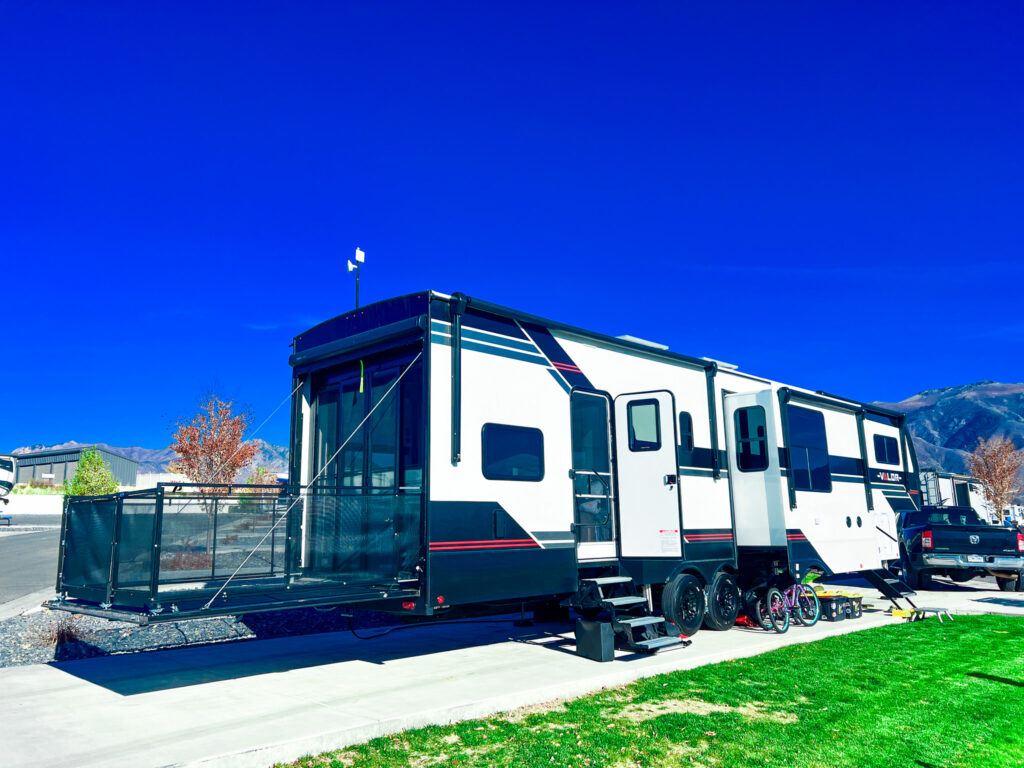
Full-time RVers traveling the country in our Alliance Valor.