So you’ve got your eye on an RV, and you’re daydreaming about where it’ll take you next. But before you hit the road, it’s important to understand the true RV ownership costs. Beyond the sticker price, you’ll need to budget for maintenance, gear, insurance, storage, fuel, and more!
How much does it really cost to own an RV?
Most first-time buyers focus on the sticker price, and while that’s understandable, as it’s the biggest, boldest number you see on the lot. The reality is, the purchase price is just the starting point. RV ownership comes with a handful of ongoing expenses that are easy to overlook until you’re already committed.
Let’s break down the true cost of owning an RV, from the gear, maintenance, and taxes to insurance, storage, and fuel. Knowing and understanding the financial layers of RV ownership, will help you understand what you are committing to before you hit the road.
RV Accessories & Essentials
Buying the RV is just the beginning. To actually use it, you’ll need gear, some of it required, some highly recommended:
Budget: $100–$2,000+ depending on how equipped you already are.
Here are the must-haves:
- Surge Protectors – Just like you’d protect your laptop or phone, your RV needs defense against power surges at campgrounds. One bad surge can fry thousands of dollars’ worth of electronics.
- Wheel Chocks – A $10 plastic set can fail at the worst time. Heavy-duty rubber versions keep your rig from rolling away.
- Sewer Hoses & Tank Treatments – Essential for emptying your black and gray tanks safely (and without an awful mess).
- Leveling Blocks – Campgrounds aren’t always level. These help stabilize your RV for sleeping, cooking, and walking inside.
- Fresh Water Hoses – RV-safe hoses are a must (don’t use your old garden hose).
- Battery & Propane – Surprisingly, many RVs don’t come with both included.
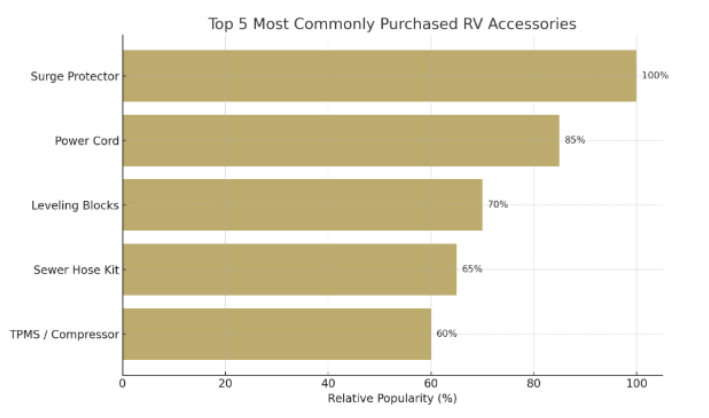
Read More: Go Camp Bundle Essential RV Accessories for Stress-Free Camping
RV Winterization Costs
If you live in a cold-weather climate, you’ll need to winterize your RV to prevent costly damage. If you don’t winterize, it could lead to burst pipes, cracked tanks, and thousands in repairs.
- DIY: ~$4–$10 per gallon for antifreeze (use only pink RV-safe formulas)
- Professional Service: $80–$160 depending on labor and location
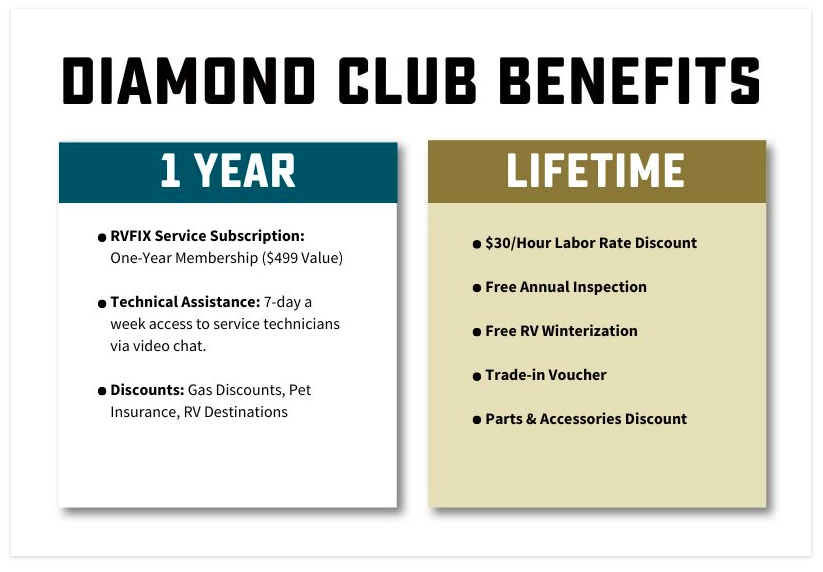
Bish’s Tip: Bish’s RV customers get access to our free winterization events through our Diamond Club membership, along with other perks like labor discounts, free inspections, and exclusive savings.
Click Below to Learn More About Bish’s Diamond Club Benefits
Registration, Taxes & Title Fees
These fees vary wildly depending on where you live, or where the RV is registered.
Some key factors:
- Annual Registration Fees – Some states charge every year, others have lifetime plates for trailers.
- Type of RV – Some states charge every year, others have lifetime plates for trailers.
- Sales Tax – Most states require 6-10% or more on the purchase price.
Bish’s Tip: Always ask for the out-the-door price, including taxes and fees, to avoid fee surprises. There’s nothing worse than being blindsided when signing the paperwork.
RV Insurance

Read More on the True Cost of Insurance
Just like a car, your RV needs insurance. Premiums depend on the RV’s classification (motorhome vs. towable), your location, and your driving record. But the biggest factor is how you’ll use it.
Bish’s Tip: Consider Your Usage
- Full-Time RVers: A full-timer is an RVer who spends more than 150 nights each year or lives in their RV year-round, using it as their primary residence. This category often requires specialized coverage for personal belongings and liablity.
- Part-Time RVers: A full-timer is an RVer who spends more than 150 nights each year or lives in their RV year-round, using it as their primary residence. This category often requires specialized coverage for personal belongings and liability.
- Weekend Warriors: RVers who use their vehicles primarily for short trips or weekend getaways. Insurance for this group may emphasize recreational use and occasional travel.
Remember to evaluate these options with an experienced agent specializing in RV coverage to find the best balance for your needs!
The right RV insurance isn’t just about protecting your vehicle, it’s about safeguarding your lifestyle, memories, and the freedom to explore with confidence.
Fuel Costs
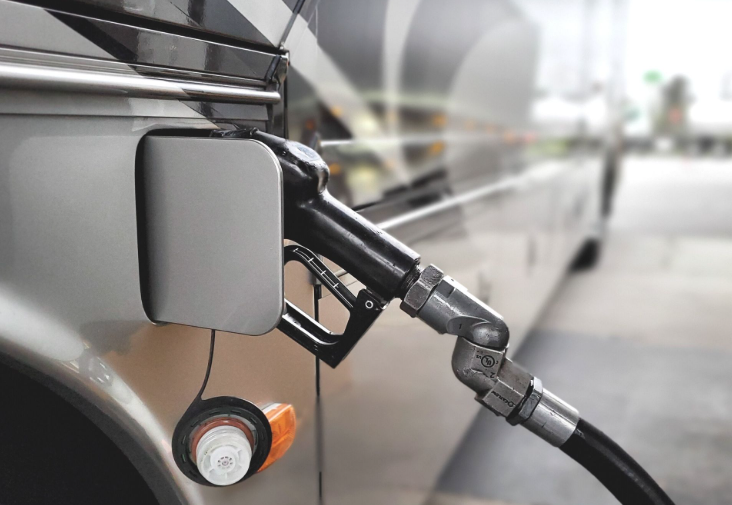
RV fuel mileage is not like your daily driver. Here is a table chart that breaks down the average cost of fuel for each class of RV based on average miles per gallon (MPG) and assuming a fuel price of $3.75 per gallon (you can adjust this based on your local rate):
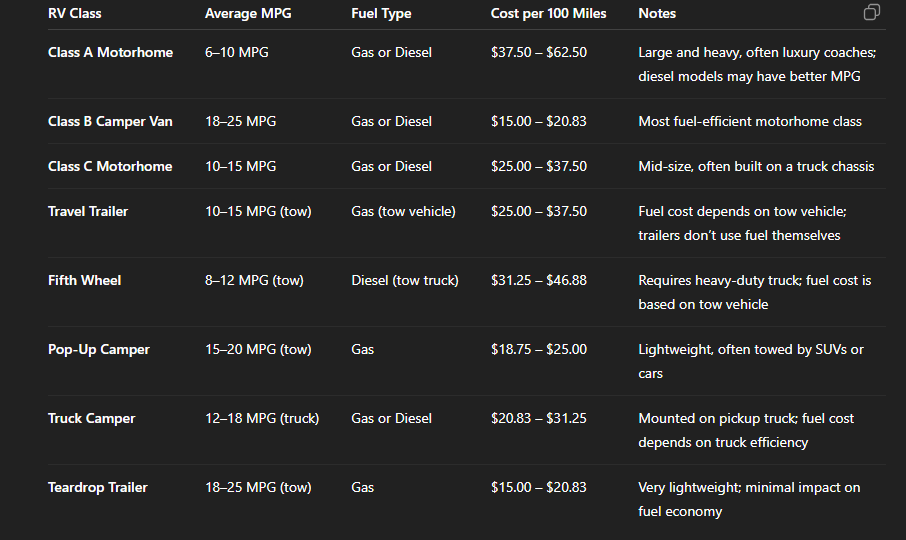
Prices are estimates and vary depending on terrain, driving habits, and fuel type. Towed RVs’ fuel costs are calculated based on the average MPG of typical tow vehicles. For diesel models, diesel prices may be slightly higher, which can affect cost estimates.
Storage Fees
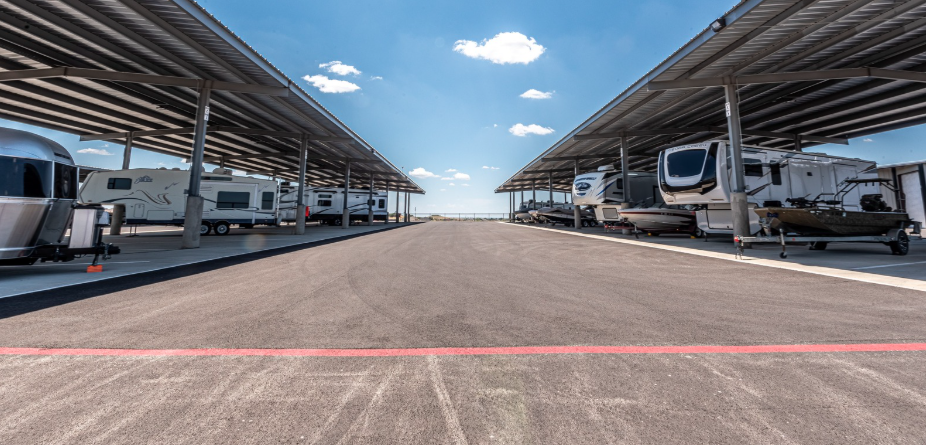
Don’t Have Space at Home to Park Your RV? Here’s What to Know:
If your driveway, yard, or neighborhood doesn’t allow for RV parking (or if you simply don’t have the room), you’ll likely need to rent storage space. The type of storage you choose can make a big difference in terms of cost, protection, and convenience.
RV Storage Options & Average Monthly Costs
| Storage Type | Average Cost/Month | Description |
|---|---|---|
| Outdoor Storage | ~$50–$100 | The most affordable option. Your RV is parked in an open lot, usually on gravel or pavement. No protection from weather. |
| Covered Storage | ~$100–$300 | A roofed structure (like a carport) shields your RV from direct sun, rain, and snow, but sides are open. |
| Indoor Storage (Non-Climate-Controlled) | ~$150–$400 | Your RV is kept inside a warehouse-like building, protected from all weather elements but may not be heated/cooled. |
| Indoor Heated / Climate-Controlled | $250–$500+ | Top-tier storage with temperature control, humidity regulation, and full enclosure. Ideal for protecting RVs from extreme temps or moisture damage. |
Don’t Forget Accessibility
Before you choose a facility, make sure to ask:
- Can you access your RV any time you need it? Some storage lots have limited hours or charge extra for after-hours access.
- Are you able to open slides and steps? If you need to prep, clean, or load your RV, tight spacing can make this difficult or impossible.
- Can you plug into shore power? Some premium facilities offer electricity so you can maintain battery charge or run appliances.
- Is there on-site security or video surveillance? Safety is a key concern — especially if you’re storing a high-value motorhome.
Bish’s tip: Even if you start with outdoor storage to save money, consider investing in a quality RV cover to protect against sun damage, water intrusion, and debris. It’s a small upfront cost that can prevent bigger repair bills down the road!

Owning an RV isn’t just a purchase, it’s a lifestyle. And like any lifestyle, it comes with costs that go beyond the price on the window. From the must-have gear to seasonal maintenance, it’s important to go in with your eyes wide open.
But here’s the good news, when you plan ahead and budget for these real-life expenses, RVing can be one of the most freeing, flexible, and fulfilling ways to travel! You’ll trade TSA lines for trailheads, hotel rooms for camp fires, and tight itineraries for total freedom.
So if you’re still dreaming about where your RV will take you next, keep dreaming! Just make sure your overall budget is top of mind.
And remember, whether you buy from us or not, Bish’s RV is here to help you travel smart and camp better — every mile along the way.


Written By: Brooke Erickson
Some say I am a writer, I like to say I am a storyteller