If you’re new to RVing, or even if you’ve been towing for years, you’ve probably found yourself scrolling through Facebook camping groups or YouTube comments trying to make sense of conflicting advice.
Bish’s expert, Josh the RV Nerd, gets thousands of repeat questions every month, so we pulled together the 10 most common RV FAQs people ask and turned them into one clear, myth-busting guide.

Whether you’re buying, storing, towing, or simply trying not to break anything, these answers will help you avoid costly mistakes and camp with confidence.
Table of Contents
How tall should an RV storage building door be?
Should I use slide-out stabilizer jacks?
Should I store my RV with the jacks up or down?
Should I level my RV before opening the slides?
Do airbags increase my truck’s towing capacity?
Can I leave my black and gray tank valves open?
Can I hang things on my RV walls safely?
Can RV manufacturers customize a floor plan for me?
How do I know what my vehicle can safely tow?
How Tall Should an RV Storage Building Door Be?
One of the most common (and costly) mistakes RV owners make is building a garage or barn that’s too short.
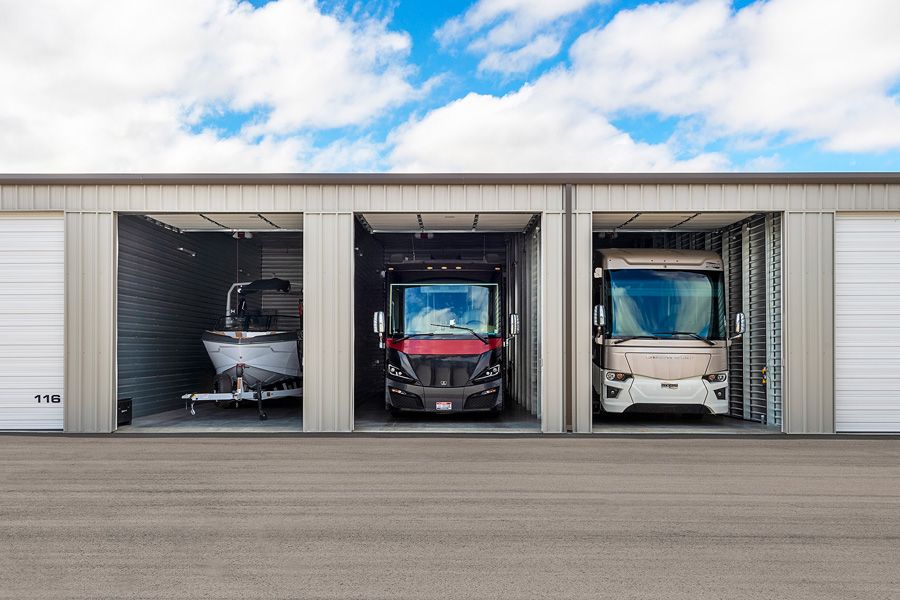
Minimum clearance needed: 14 feet, actual usable clearance, not door-frame height.
Most garage doors hang below the top of the opening, meaning a “14-foot door” often provides only 13’6” of clearance.
That’s a fast track to ripping off your A/C, antennas, or vents.
Pro Tip:
Always tell your contractor you need at least 14 feet of full clearance when the door is open, which may mean a 14’6” or taller rough opening.
Should I Use Slide-Out Stabilizer Jacks?
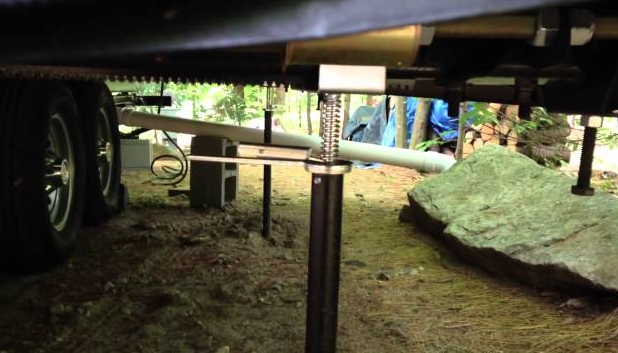
Short answer: Absolutely not.
Slide-outs are engineered to move with the RV’s body. When you add external slide jacks, you force the slide to stay rigid while the RV settles or flexes. This creates a stress point that can:
- Crack your slide floor
- Damage gears or motors
- Cause leaks
- Lead to catastrophic slide failure
If your RV is on soft ground or uneven soil, the risk doubles. Skip the slide jacks, they do more harm than good.
Should My RV Be Stored With the Jacks Up or Down?
For long-term storage, especially over winter, store your RV with the jacks up.
Here’s why:
- Jacks can sink into soft or thawing ground
- Frozen jacks can get stuck
- You may rip a jack off trying to move the RV
- Extended jacks give mice an “elevator” into your trailer
Place a wood block under the tongue jack to prevent sinking and you’re good to go.
Should I Level My RV Before or After Opening the Slides?
Always level first, then open the slides.
Slides are designed to operate when the RV is level. Opening slides on an unlevel trailer stresses the mechanisms and can cause premature wear or even failure.
Order of operations:
- Park
- Level the RV
- Stabilize
- Open slides
Do Airbags Increase My Towing or Payload Capacity?
No, and this is a dangerous misconception.
Airbags improve ride stability and reduce sag, but they do not increase:
- Towing capacity
- Payload capacity
- Axle rating
- Braking ability
- Drivetrain strength
Your truck’s VIN sticker ratings are the law. Airbags don’t change them. If you’re overloaded without airbags, you’re still overloaded with them, and warranty repairs may be denied.
Can I Leave My Tank Valves Open at the Campsite?
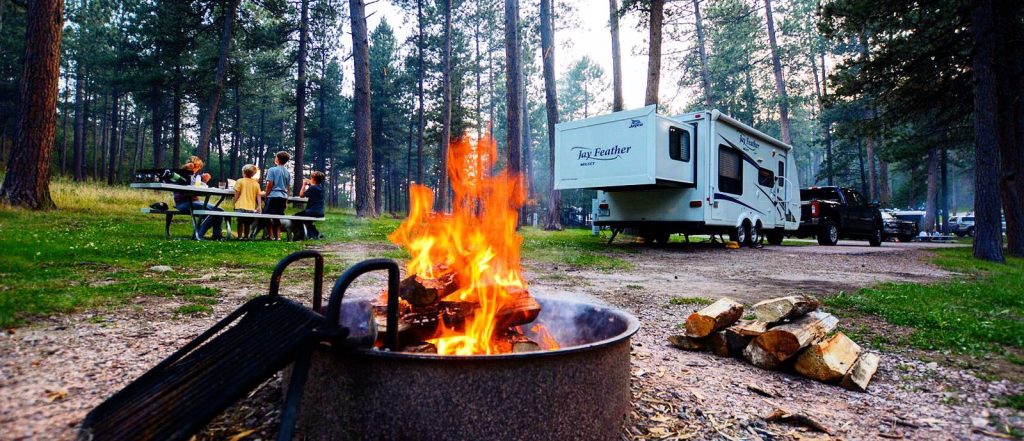
Black tank valve: Always keep it closed.
If you leave it open, liquids drain out while solids stay behind and build into the dreaded “pyramid of poop.” You do not want to deal with breaking that up with a sewer wand.
Gray tank valve:
Technically you can leave it open, but best practice is to:
- Keep it closed
- Dump black first
- Then dump gray to rinse your hose with soapy water
This keeps your plumbing cleaner and reduces odor.
Can I Hang Things on My RV’s Walls?
It depends on whether your RV is stick-and-tin or laminated fiberglass.
Stick & Tin Walls
- Wood studs every ~16 inches
- You can screw into studs for heavier items (TVs, shelves, etc.)
- Use a stud finder to locate structure
Laminated Fiberglass Walls
- Aluminum studs may be 4+ feet apart
- Foam core offers almost zero screw retention
- You risk wall damage or delamination
Rule of thumb:
- Stick & tin = safe to mount into studs
- Laminated walls = use lightweight methods (Command strips, adhesives)
Can RV Manufacturers Customize a Floor Plan for Me?
Unfortunately… no.
RVs are produced with cookie-cutter, repeatable floor plans. Walls, cabinetry, showers, and furniture footprints are standardized so factories can build efficiently.
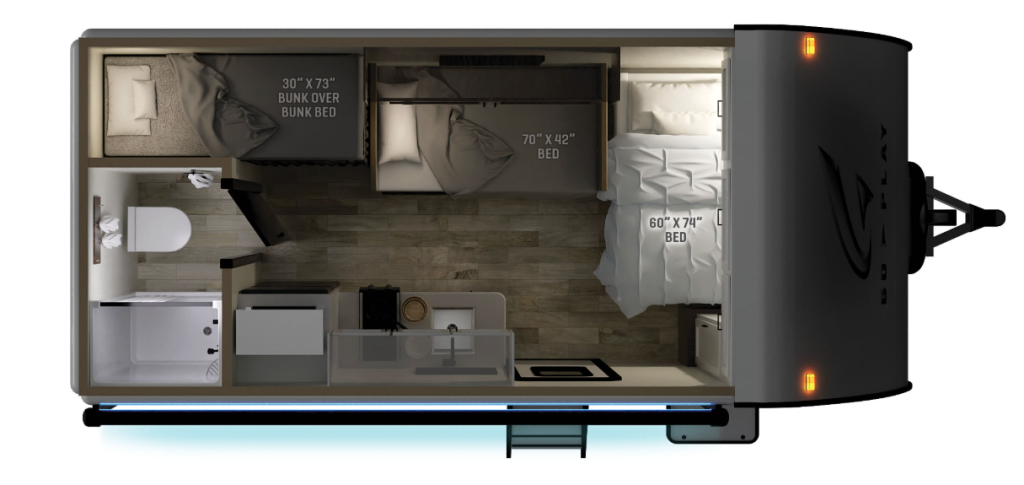
Manufacturers may offer:
- Optional sofas
- Optional dinettes
- Shade upgrades
But they will not move walls, enlarge showers, change cabinet dimensions, or redesign a layout.
If you need custom construction, you’re looking at van conversions or high-end bus builders — not traditional RV manufacturers.
Can a Single Woman RV Alone?
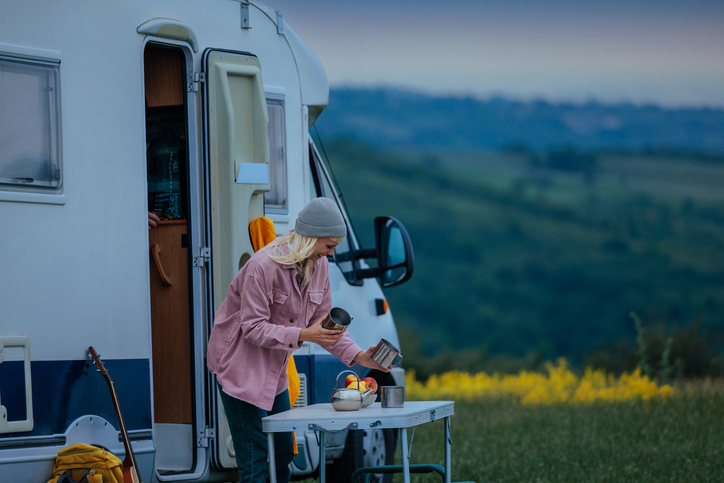
Absolutely, and many do!
In fact, around 90% of solo RVers are women.
RVing alone is about:
- Following safe towing practices
- Learning setup steps
- Choosing the right floor plan and tow vehicle
- Trusting your capability, not anyone’s outdated opinions
There is a massive and supportive community of solo RVing women on YouTube, Instagram, and Facebook, and they thrive living life on their own terms.
How Do I Know What My Vehicle Can Safely Tow?
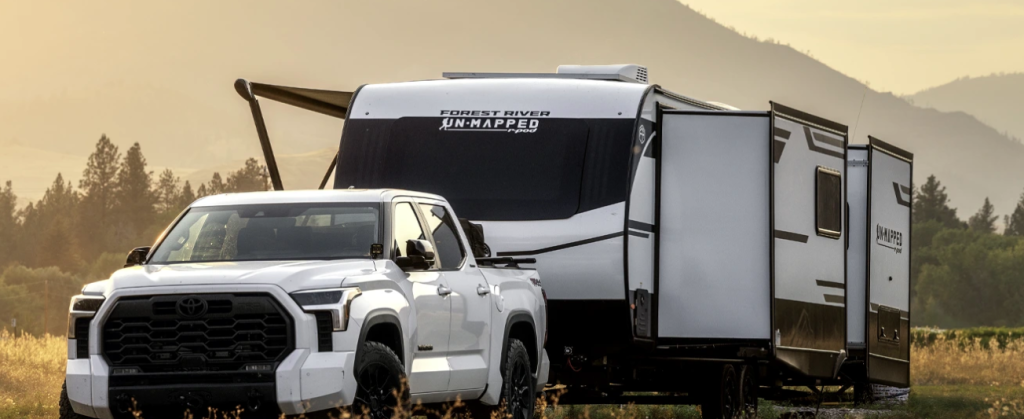
This is by far the most common RV question, and the most important.
More than 50% of towable RV owners are pulling more weight than their vehicle is rated for.
To tow safely, you MUST know:
- GVWR of the trailer
- Maximum tow rating of your vehicle
- Payload capacity (the most overlooked number)
- Tongue or pin weight
- GCWR (combined rating)
The 80% Guideline
If your vehicle can tow 3,500 lbs, aim for trailers with loaded weight at or below 80% of that, especially if you tow:
- In mountains
- In wind
- Long distances
- With family + cargo in the vehicle
Flatland towing? 80% works.
Mountain towing? Drop to 70–60% for comfort and control.
Biggest mistake buyers make:
Comparing truck maximum capacity to RV dry weight.
Always compare max to max.
For more help, Bish’s RV has multiple towing guides that walk buyers through every step.
Happy Camping
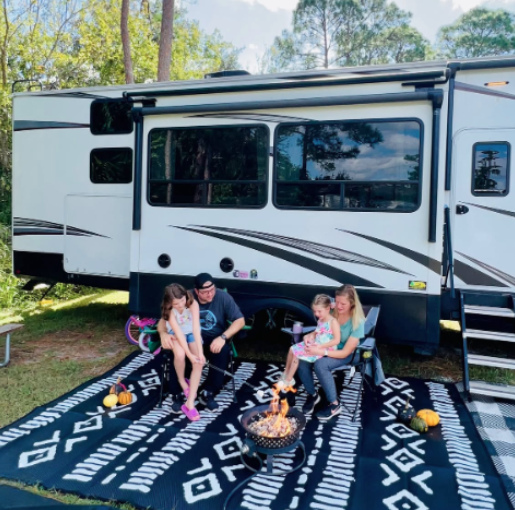
RV ownership comes with a learning curve, and in an online world full of mixed advice, it’s easy to get overwhelmed. These 10 FAQs cover the issues RVers ask about most, and getting them right will help you:
- Protect your RV
- Stay safe on the road
- Avoid expensive repairs
- Tow confidently
- Make smarter buying decisions
If you’re shopping for your first RV or upgrading your setup, check out Bish’s RV’s educational guides, towing calculators, and walkthroughs to make your next trip safer and smoother.
Written By: Brooke Erickson
Some say I am a writer, I like to say I am a storyteller