If you’re new to RVing, welcome! You’re entering one of the most exciting, family-friendly, and rewarding ways to travel. But before we dive in, let’s get one thing out of the way: every new RVer makes mistakes.
Every single one!
Whether you’re heading out for your first weekend trip, planning a cross-country adventure, or daydreaming about a longer journey someday, the learning curve is completely normal.
The good news?
Most of the common mistakes are easy to avoid once you know they exist. And steering clear of them from the start doesn’t just make your RV life smoother, it makes it safer, less stressful, and a whole lot more enjoyable.
The tips in this guide apply to everyone, whether you’re a weekend warrior, an occasional traveler, or even someone considering full-time RV living down the road. No matter how you plan to use your RV, a little preparation goes a long way.
TABLE OF CONTENTS
Mistake #1 – Not Knowing Your RV’s Weight and Towing Requirements
Mistake #2 – Not Doing a Full Walkaround Before Leaving a Campsite
Mistake #3 – Misjudging Campsite Size and Layout
Mistake #4 – Forgetting Wheel Chocks and Leveling First
Mistake #5 – Not Knowing How to Fully Operate Their RV Systems
Mistake #6 – Underestimating How Fast Tanks Fill (Gray, Black, and Fresh)
Mistake #7 – Packing Too Much for the First Trip
Mistake #8 – Not Practicing Backing Up Before the First Trip
Mistake #9 – Poor Planning for Travel Days
Mistake #10 – Expecting Everything to Go Perfectly
What Bish’s RV Recommends for New RVers
Mistake #1 – Not Knowing Your RV’s Weight and Towing Requirements
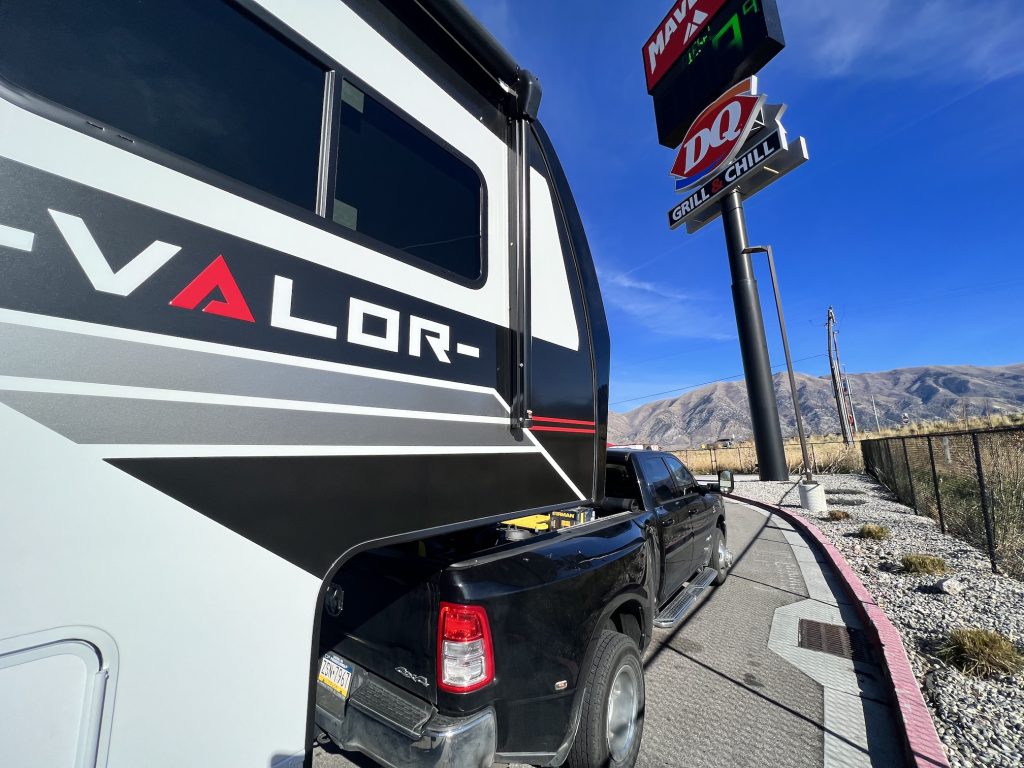
One of the most common (and most serious) mistakes new RVers make is hitting the road without fully understanding how much their RV weighs or how much their vehicle can safely tow. It’s easy to get excited about a floorplan you love and overlook the numbers, but weight is one of the most important factors in RV safety.
To understand towing, you’ll need to get familiar with a few key terms.
GVWR (Gross Vehicle Weight Rating) is the maximum weight your RV can safely be when fully loaded – including water, gear, and people.
Payload refers to how much weight your truck can carry in the bed and cab.
Tongue weight (for travel trailers) or pin weight (for fifth wheels) is the amount of weight pressing down on the hitch.
And finally, your tow rating tells you how much your vehicle is actually capable of pulling.
All of these numbers work together, and ignoring them can put you in a dangerous situation.
When your RV and truck aren’t properly matched, problems show up fast. You may feel the trailer swaying more than it should, climbing hills becomes harder, braking distances increase, and windy days become nerve-wracking. In extreme cases, mismatched towing setups can cause serious damage to your truck or RV – or even lead to accidents.
The good news is that avoiding this mistake is easy once you know what to look for. Start by checking your vehicle’s tow rating in the owner’s manual or on the manufacturer’s website. Compare it directly to the RV’s GVWR, not just its dry weight. Make sure your tongue or pin weight falls within your truck’s payload capacity. And when in doubt, ask a dealer or service tech to help you double-check the numbers. A safe towing setup means more confidence on the road and far more enjoyable adventures.
Mistake #2 – Not Doing a Full Walkaround Before Leaving a Campsite
One of the simplest, but most costly, mistakes new RVers make is skipping a full walkaround before pulling out of a campsite. It sounds obvious, but you’d be surprised how many people drive off with their water hose still connected, storage doors hanging open, or the TV antenna sticking straight up.
Even something small, like leaving a step out or stabilizers down, can lead to major damage in seconds.
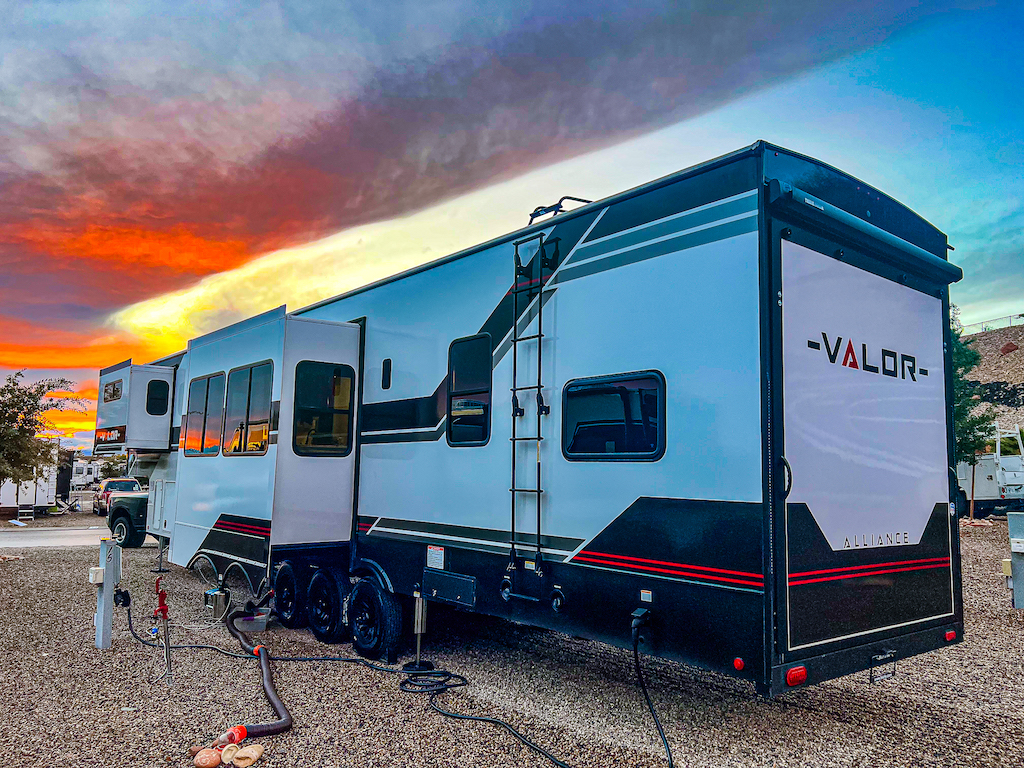
A quick walkaround can save you money, time, and a whole lot of stress. Before pulling out, go slowly around your RV and check every connection and component. Make sure hoses and cables are disconnected and stored, slides are fully retracted, stabilizers are up, doors and hatches are locked, the antenna is down, the awning is secured, and the campsite is completely clear. It only takes one missed step to rip something off your RV, or worse, damage someone else’s property.
To make this easier, many RVers use a simple pre-departure checklist. You can keep it on your phone, print it, or even tape it inside one of your storage bays. The goal is to follow the same steps every time so nothing gets forgotten.
A quick checklist not only prevents damage but also ensures a safer, smoother travel day. When you take a few extra minutes to do a proper walkaround, you start each trip with peace of mind and far fewer surprises.
Mistake #3 – Misjudging Campsite Size and Layout
Follow Us on Instagram!
A very common mistake new RVers make is booking a campsite that’s simply too small or too tight for their rig.
It happens all the time.
Someone reserves a site based on availability or a quick description, only to arrive and realize they can’t make the turn, can’t back in, or can’t fully extend their slides without hitting a tree or power pedestal. It’s frustrating, stressful, and can easily ruin the start of your trip.
To avoid this, it’s important to understand how your RV’s length (and sometimes height) compares to the campsite’s listed measurements. A site labeled “30 feet” doesn’t always mean your 30-foot RV will fit comfortably. It may refer to the pad length, not the total usable space. Some parks require your truck to fit on the pad with the RV, while others allow it to be parked elsewhere.
Slide placement also matters; a site may technically fit your RV, but low branches or tight spacing can make extending slides impossible.
Before booking any site, take a few minutes to check photos, reviews, and campground maps. Reading recent guest reviews can also reveal whether a site is hard to back into, narrow, or not as long as advertised. A little research goes a long way, and it helps ensure your arrival is smooth instead of stressful.
Mistake #4 – Forgetting Wheel Chocks and Leveling First
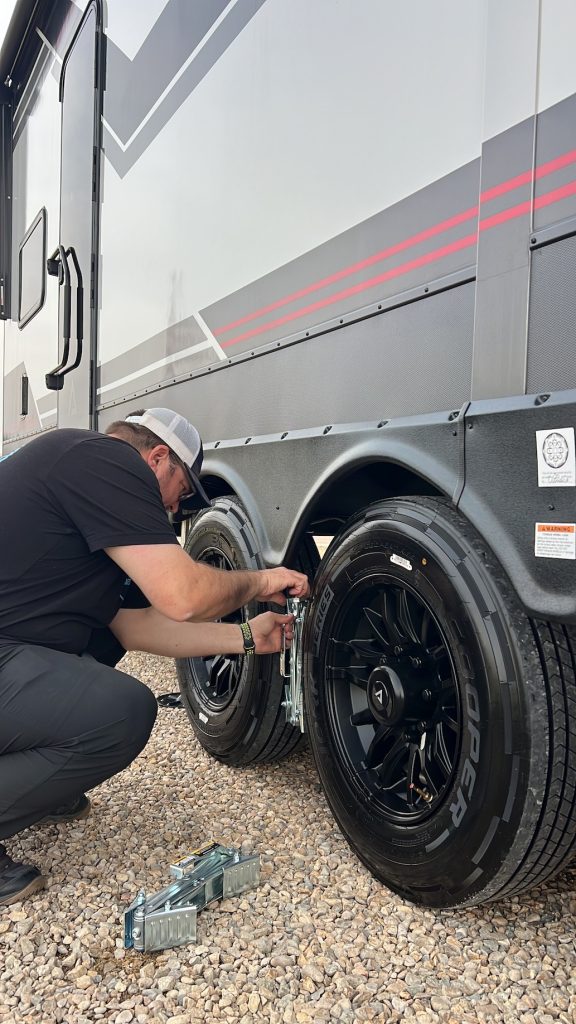
One of the first lessons every new RVer learns, often the hard way, is how important it is to properly level your RV and chock your wheels before doing anything else. Leveling might seem like a small detail, but it plays a huge role in the comfort, safety, and overall functioning of your RV.
A level RV means your doors don’t swing open on their own, your shower drains correctly, and your appliances, especially the refrigerator, work the way they’re supposed to.
In absorption-style RV refrigerators, being unlevel for long periods can even cause long-term damage.
Just as important as leveling is chocking your wheels before unhitching or putting down your stabilizers.
This is a step many new RVers accidentally skip, and the results can be dangerous. Wheel chocks prevent your RV from rolling or shifting unexpectedly as you disconnect from your tow vehicle. Even a slight incline can cause movement, which creates a hazardous situation for you and anyone nearby.
Chocking the wheels takes only a few seconds, but it eliminates a major safety risk.
Proper leveling and chocking make your entire setup process smoother and safer. Not only does it protect your RV and equipment, but it also ensures a far more comfortable stay. When you get those two steps right from the start, everything else like slides, hookups, and settling in becomes much easier.
Mistake #5 – Not Knowing How to Fully Operate Their RV Systems
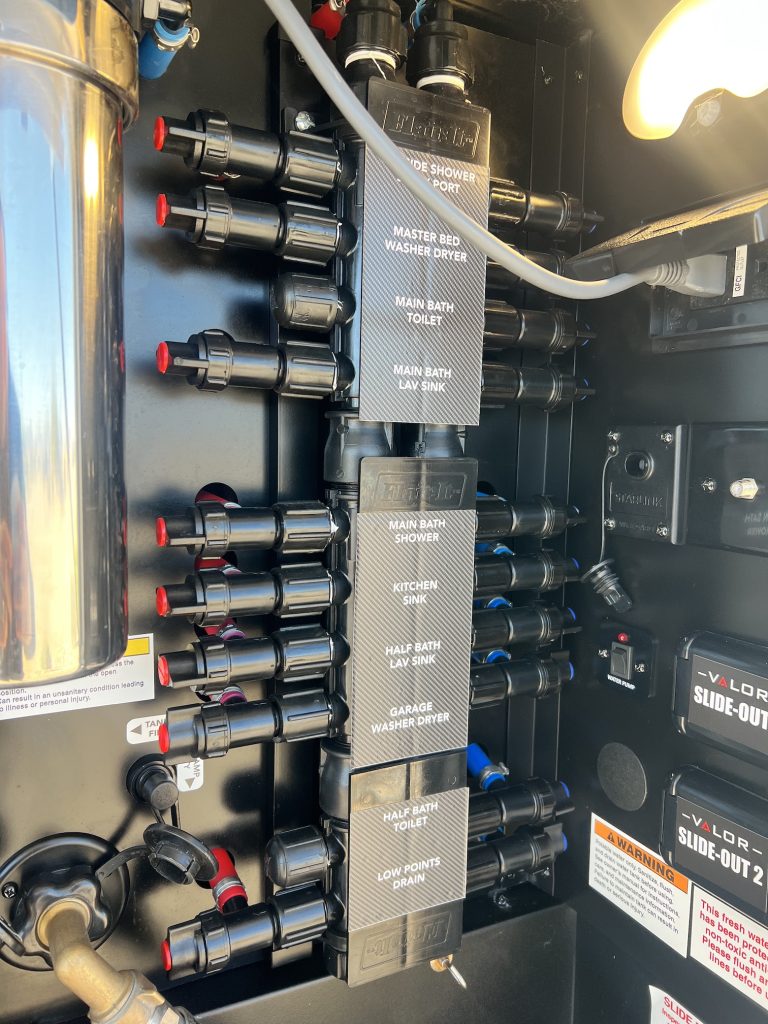
A big mistake many new RVers make is hitting the road without fully understanding how their RV systems work.
It’s completely normal.
Every RV comes with a collection of buttons, switches, valves, and panels that can feel overwhelming at first. But learning what each system does (and how to use it correctly) can prevent a long list of problems, frustrations, and even avoidable repairs.
Your water pump is one of the systems that confuses new RVers the most. It needs to be on when you’re using water from your fresh tank, but off when you’re connected to city water. The water heater (typically) also has two modes, electric and propane, and knowing when to use each makes a big difference in energy usage and recovery time.
Then there are the slides, which all operate slightly differently depending on your RV. Understanding when your slides need the RV leveled or stabilized can prevent mechanical issues.
Your battery system is another core component that many beginners overlook. RV batteries power lights, slides, fans, and other essentials when you’re not plugged in. If you don’t understand how your batteries charge, or how quickly they drain, you can end up without power faster than you expect.
Alongside that is your propane system, which runs your furnace, stovetop, and sometimes your fridge or water heater. Knowing how to manage propane usage helps you avoid cold nights or unexpected shutdowns.
Finally, the tanks (fresh, gray, and black) are often the source of new RVer stress simply because people don’t understand how quickly they fill or how to empty them properly. We will cover this in more depth next.
The truth is, many RV issues come down to confusion or incorrect operation rather than actual equipment failure. Taking the time to understand each system, either through your owner’s manual, YouTube tutorials, or a walkthrough with a technician, will make your trips smoother and help you avoid many of the most common rookie mistakes.
Mistake #6 – Underestimating How Fast Tanks Fill (Gray, Black, and Fresh)
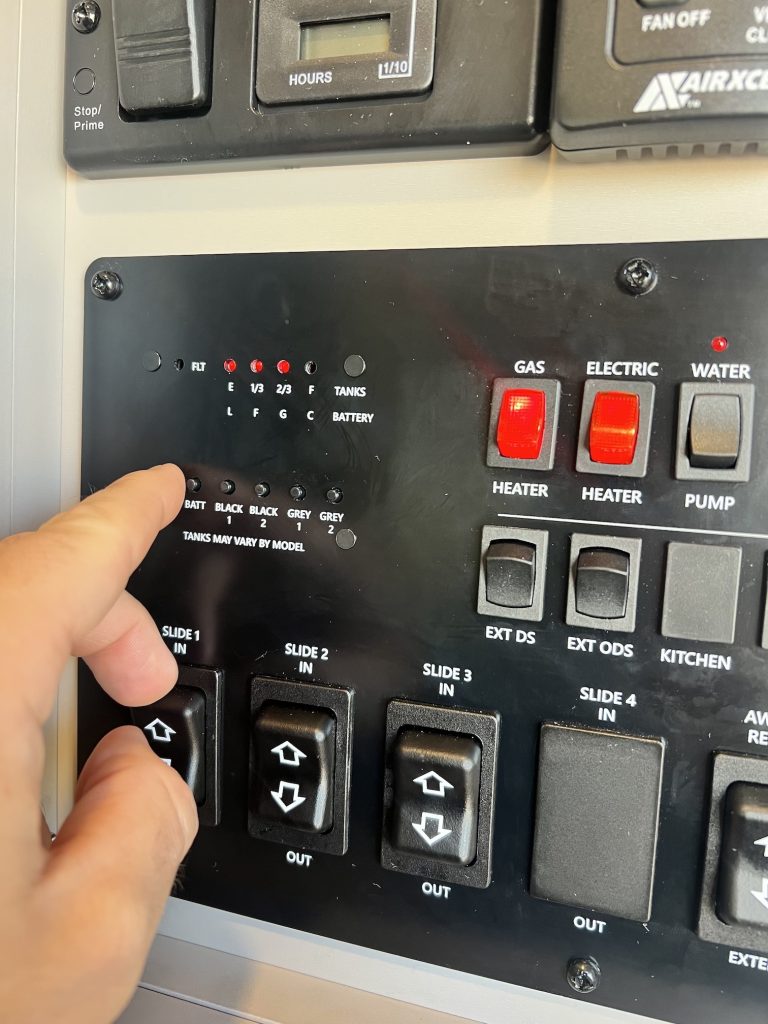
One of the biggest surprises for new RVers is just how quickly their tanks can fill, especially during a busy weekend of camping. When you’re used to unlimited water at home, it’s easy to forget that every shower, dishwashing session, bathroom break, and hand wash adds up.
Even with conservative use, gray tanks can fill in a single day, and black tanks can reach capacity faster than many people expect. Fresh water tanks also deplete quickly when dry camping, which can leave you without water long before your trip is over if you’re not prepared.
There are a few telltale signs that your tanks are getting full. A gray tank that’s near capacity might cause the shower to drain slowly or back up completely. A black tank that’s filling up may produce more odor than usual or make flushing feel weaker. For fresh water, the pump may start sputtering or running intermittently.
Many RVs have tank sensors, but they aren’t always accurate, so paying attention to behavior can be just as helpful as reading the panel.
The good news is that you can stretch your tank capacity with a few simple changes.
Short showers, using campground bathhouses, wiping dishes before washing them, capturing rinse water, and spreading out water usage all help extend your tanks, especially the gray. When dry camping, using paper plates or cooking meals that require fewer dishes can make a big difference.
Emptying your tanks strategically, knowing the closest dump stations, and monitoring your water levels regularly will help you avoid overflowing tanks or running out of fresh water at the worst time.
Mistake #7 – Packing Too Much for the First Trip

Almost every new RVer makes the same mistake on their first outing: they bring way more than they actually need. It’s natural, you want to be prepared for anything. But RVs have limited storage, limited payload capacity, and limited space to move around. When you pack too much, the RV feels cluttered, organization becomes impossible, and you spend more time managing your stuff than enjoying your trip.
Overpacking also brings safety concerns. Every RV has a maximum weight limit, and it’s surprisingly easy to exceed it when you load up with extra clothes, tools, gear, appliances, and “just in case” items. Too much weight can affect how your RV tows, how your brakes perform, and how stable everything feels on the road.
Keeping your RV within its weight limits is one of the simplest ways to stay safe while traveling.
The good news is that you probably need far less than you think. For your first trip, focus on the essentials: bedding, basic utensils, simple cooking supplies, a few outfits, and the gear you know you’ll use. Leave the bulky extras at home until you’ve taken a few trips and know what your family actually needs.
Most RVers quickly discover that traveling lighter makes setup easier, keeps the RV more organized, and creates a much more relaxing camping experience.
Mistake #8 – Not Practicing Backing Up Before the First Trip
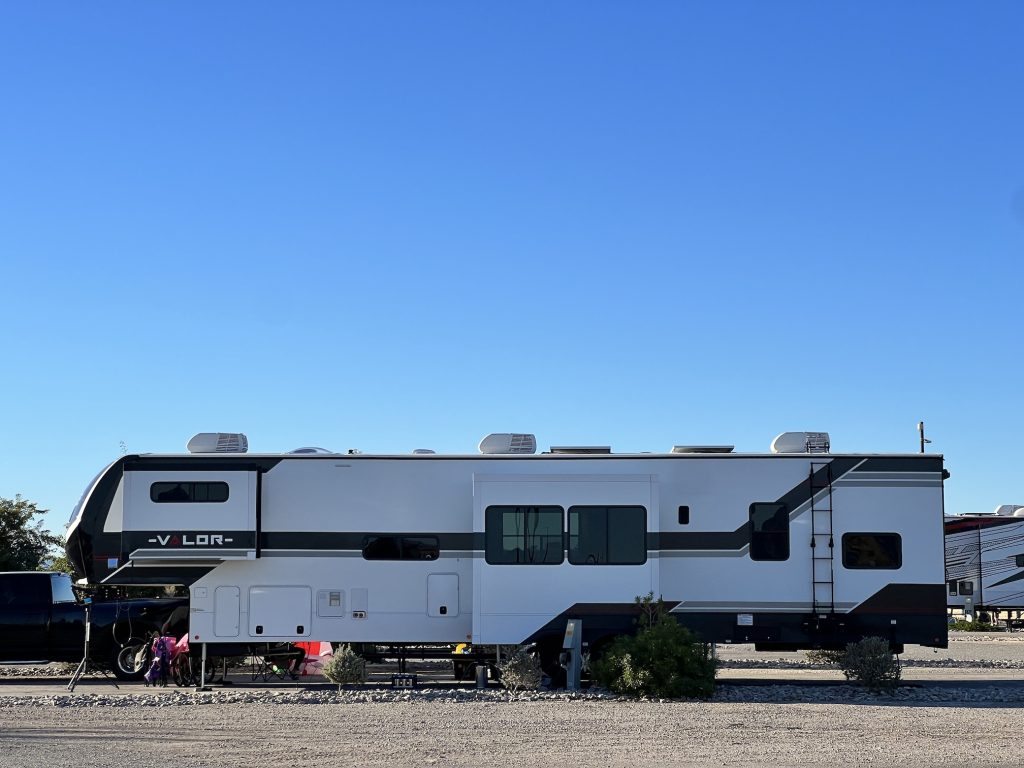
Backing an RV into a campsite is one of the biggest sources of stress for new RVers. Even confident drivers can feel overwhelmed when they pull into their first campground and realize they have an audience, tight angles, trees, picnic tables, and sometimes only a few inches to spare. The anxiety is completely normal, but it becomes much easier when you’ve practiced ahead of time instead of trying to figure it out under pressure.
The best way to build confidence is to practice backing up in an empty parking lot before your first trip. Choose a large, open area and set up “pretend obstacles” with cones, water bottles, or anything you have on hand. Practicing turns, angles, and correcting your line without the stress of a campground helps you understand how your RV responds and gives you a feel for how much room you need.
Good communication with your spotter is just as important as practicing. Before backing up, decide on simple hand signals, establish a clear line of sight, and agree on a plan. The spotter should stand where the driver can easily see them in the mirror, and both people should know what each signal means. Clear, calm communication prevents misunderstandings and helps avoid accidents. With a little practice and teamwork, backing into a campsite becomes far less intimidating and sometimes even fun.
We personally use the terms, “driver side” and “passenger side” to determine which way the back of the RV needs to go. This prevents us from figuring out if “right” means the driver’s right or the passenger’s right!
Mistake #9 – Poor Planning for Travel Days
Travel days can either be enjoyable and relaxed… or long, stressful, and exhausting.
One of the biggest mistakes new RVers make is trying to drive too far in a single day. It’s easy to underestimate how much slower RV travel is compared to car travel, especially between fueling stops, bathroom breaks, towing speeds, unexpected construction, or windy roads, even a seemingly short trip can stretch much longer than expected. Pushing too hard leads to fatigue, frustration, and rushed setups when you finally arrive.
Many RVers follow the 2-2-2 rule or 3-3-3 rule to avoid burnout. The 2-2-2 rule means you drive no more than 200 miles, arrive by 2 PM, and stay for at least 2 nights. The 3-3-3 rule follows the same idea: travel no more than 300 miles, aim to arrive by 3 PM, and stay for at least 3 nights. While you don’t have to follow these rules perfectly, they serve as a helpful guideline for planning realistic travel days that keep you fresh, alert, and ready to enjoy your destination.
Breaks are another essential part of a smooth travel day. Stopping regularly to stretch, eat, walk the dog, or give the kids a chance to move around keeps everyone in better spirits. It’s also crucial to check the weather before you leave. Wind, storms and freezing temperatures can drastically change your driving plans or even make towing unsafe.
And perhaps the most important rule of all: avoid arriving at a campground after dark.
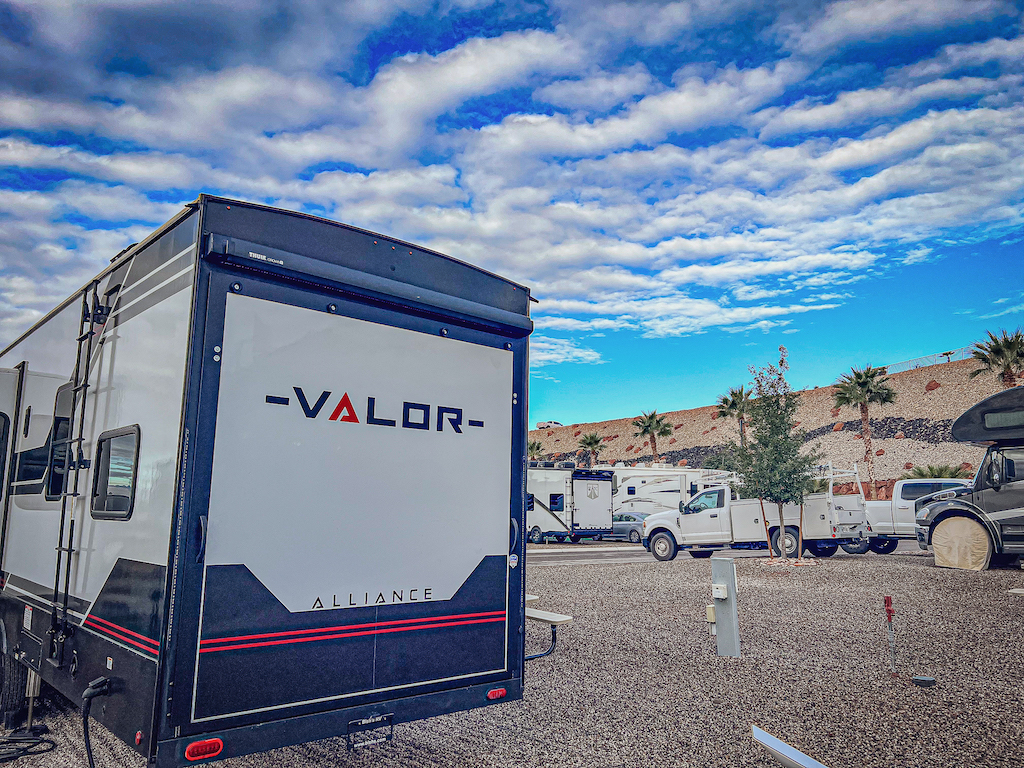
Parking, backing in, leveling, and hooking up are all significantly harder (and more stressful) when you can’t see clearly. Taking a little extra time to plan your route, check conditions, and set reasonable expectations makes every travel day smoother and more enjoyable. A good plan takes the pressure off and lets you focus on the fun parts of RV life.
Mistake #10 – Expecting Everything to Go Perfectly
One of the biggest misconceptions new RVers have is believing that every trip will go exactly as planned.
The truth is that RVing comes with a learning curve, and even experienced RVers still run into surprises. Weather changes, campground mix-ups, minor repairs, forgotten items, and setup hiccups all happen from time to time. It’s completely normal and part of the lifestyle and not a sign that you’re doing anything wrong.
Things will go wrong.
Maybe the water pressure is low, the tanks fill faster than expected, or you struggle backing into a tight campsite. Maybe a drawer pops open during travel or you arrive later than planned. When you accept that challenges are part of the journey, they become far less stressful. Each mishap is just another step in gaining confidence and becoming the kind of RVer who can handle anything that comes your way.
The most important thing is your mindset. Approaching RV life with flexibility, patience, and a sense of humor makes every trip more enjoyable. Instead of striving for perfection, aim for progress. Every experience teaches you something new, and over time, the things that once felt overwhelming become second nature.
RVing is about adventure, exploration, and creating memories, not about having flawless travel days. When you embrace the unexpected, that’s when the magic of RV life really starts to show.
What Bish’s RV Recommends for New RVers

While every new RVer learns at their own pace, having the right support from the start makes a massive difference. That’s one of the reasons Bish’s RV stands out so strongly in the industry, they’re not just here to sell an RV. They’re here to teach, guide, and make sure you feel confident long after you drive off the lot. Education is a core part of their philosophy, and new RVers especially benefit from that extra level of care.
One of the best examples of this is the Bish’s RV walkthrough that comes with every RV purchase. We were new to toyhaulers, so even after 4.5 years of traveling in a bunkhouse fifth wheel, there were a lot of new things to us. Instead of rushing through the basics, Bish’s took the time to show us exactly how our systems work (water, electrical, slides, appliances, towing equipment, and more). We encourage you to ask questions, film the walkthrough, because it can be a very stressful day picking up your new RV.
For first-time RVers, this kind of hands-on learning is invaluable.
What really sets Bish’s apart, though, is their aftercare support. Buying an RV is just the beginning, and Bish’s knows it.
RV Fix
Bish’s also offers a unique service called RV Fix, designed specifically to help RV owners troubleshoot common problems without the stress of booking a full service appointment. RV Fix connects you with trained Bish’s technicians who can walk you through repairs and diagnostics remotely, saving you time, money, and a trip to the service center.
Whether you are buying a used RV or a brand new RV, the reality is that something is going to break. It’s important to know how your RV operates, but ultimately, there are RV technicians who are experts and they are live on the phone with you…. with video…to walk you through any issues you may have.
When we first picked up our new RV, we had a bit of a water leak and I could not figure out the problem. We put a call into RV Fix and within the hour, it was fixed, over the phone by a certified technician who walked me through step-by-step what to do.
So, whether it’s an electrical issue, a slide that won’t move, a water pump that suddenly stopped working, or a mystery problem you can’t quite pinpoint, RV Fix gives you expert help right when you need it. It’s one more way Bish’s ensures you’re supported not just at the time of purchase, but throughout your entire RV ownership journey.
Final Thoughts
If you’re new to RVing, take a deep breath. Mistakes are a completely normal part of the experience.
Everyone has a learning curve, and every seasoned RVer has a story (or ten) about the things they wish they had known earlier. The important thing is that you’re getting out there, creating memories, and discovering the kind of travel that brings you joy.
Give yourself permission to take it slow. Learn one thing at a time, practice when you can, and don’t be afraid to laugh when things don’t go perfectly. RVing is less about flawless execution and more about flexibility, curiosity, and the adventure of the unknown. The more trips you take, the more confident you’ll become and the easier everything starts to feel.
We’d love for you to follow along on our journey as we continue exploring, learning, and sharing real-world tips from the road. If you ever have questions, need advice, or just want to connect with fellow travelers, we’re always happy to help.
Here’s to smoother trips, better adventures, and many unforgettable moments ahead.

Written By: Chris & Amanda Stocker (Type1Detour)
Full-time RVers traveling the country in our Alliance Valor.